The post Five Things We Learnt about Dancer Sonal Mansingh From a New Biography appeared first on The Ladies Finger.
]]>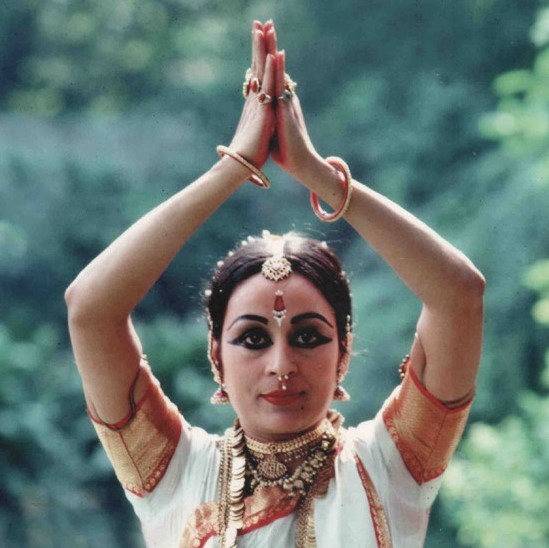
Sonal Mansingh doing Bharatanatyam. Photo via sonalmansingh.in
Originally published on 25 April 2017.
The life and career of Sonal Mansingh, the renowned Indian classical dancer, has now been recorded in a new book. The great thing about Sujata Prasad’s biography Sonal Mansingh: A Life Like No Other (published by Penguin Random House) is that most of the chapters are written in a no-nonsense question-answer mode.
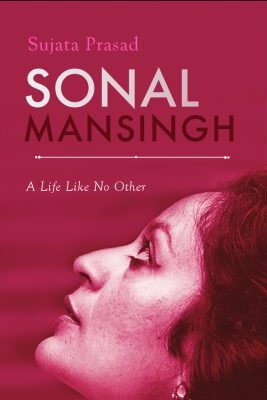 Prasad asks Mansingh about a host of topics, including her music tastes, which vary from Bob Dylan to Kishori Amonkar, what she did during the Emergency, her first dancing lesson with a Manipuri teacher in Nagpur at the age of four, and beginning Bharatanatyam dance before the age of seven.
Here are five fun things we learnt from the interviews with Mansingh:
1. Mansingh as a teenager
She describes her adolescence as ‘kitschy and teenage’, and spent her free time having long philosophical discussions with her grandfather about history and literature, writing letters to friends, and going shopping for kanjeevaram saris. On one memorable occasion, she even shared her very first gin and lime with her gurus. But she was hardly at a loss for things to do, because dance had become her world. Soon after her graduation, she ran away from home, leaving for her guruji’s house in Bangalore in order to pursue dance full-time:
“I left home rather dramatically, packing my essentials in a Girl Guide bag and an old holdall, and slipping out to take a BEST bus to the Victoria Terminus station.”
2. Bharatanatyam vs Odissi
Mansingh says she had an ‘equal passion’ for both dances, and can’t choose one favourite. She was taught Odissi by the famous Kelucharan Mohapatra in Katak, and her rigorous training in Bharatanatyam helped her learn the basics of Odissi pretty rapidly.
“Bharatanatyam is majestic, geometrical in conception, architectural, whereas Odissi is lyrical, graceful, and sculptural.”
3. Loud thumping noises
After her marriage to the Indian diplomat Lalit Mansingh, Mansingh was based out of Geneva for a while. She loved it, but the only hitch was that her landlady wasn’t so happy about the loud thumping noises she could hear, and one day gave her a talking to about it: “You look so tiny, how do you manage to produce such earth-shattering sounds? My chandelier is swaying crazily and will break!” So Mansingh had to hunt for other places to practice, the spare rooms of friends or empty cellars.
4. On socialism and the Emergency
Mansingh was part of a young socialist group, which included the journalist George Fernandes, the author C.G.K Reddy, and the politician Madhu Dandavate. She says her “closest friends were poster boys of resistance”. The Emergency felt outrageous to her because of its blatant violation of people’s constitutional rights, and she was thoroughly disturbed by the number of people she admired in the arts, like poets Girdhar Rathi and Baba Nagarjun, who were imprisoned: “It felt as if the country was disembowelling herself.” For her part, Mansingh refused to dance at certain events organised by the government.
5. Not so hot on YouTube learning
Mansingh, when asked whether aspirational dancers can begin their journey on YouTube, isn’t so sure. “YouTube cannot produce talent that can be taken seriously,” she says (while sounding a wee bit snarky about boogie, salsa and zumba, which she says you can learn online by imitating dancers). Mansingh declares that online learning isn’t bad for learning the rudiments of a form but can’t impart a knowledge of the rigid structure, musical aspect, and discipline of classical dances, for which she thinks there’s no way like learning from a guru. Because according to her, classical dance needs you to be thoroughly committed: “It has to consume you fully. You have to be at the edge of madness.”
The post Five Things We Learnt about Dancer Sonal Mansingh From a New Biography appeared first on The Ladies Finger.
]]>The post How Does the Church in India Still Have the Nerve to Protect Sexual Predators in its Ranks? appeared first on The Ladies Finger.
]]>
India – Church – 8 by Rafael Nepô / CC by 2.0
Originally published on 17 November 2016. Updated.
On Monday, 25 June 2018, five priests from Kerala were accused of blackmailing and sexually abusing a married woman for several years. These priests are a part of the Malankara Orthodox Syrian Church and have not yet been suspended.
“If it comes out, it will be like a tsunami,” nun Manju Kulapuram said earlier this year about the rampant sexual abuse of women by the men of the Catholic church in India. Evidently, Kulapuram was onto something – and it’s across denominations, nor confined just to the Catholic Church. Unlike other workplaces, which in theory are meant to have set up mandatory internal complaints committees, there is no formal institution in place that addresses sexual abuse inflicted by members of the clergy.
On 14th November, a woman based in Kozhikode registered a police complaint about a parish priest in Nadakkavu St Mary’s English Church. She alleged that he sexually harassed her over email and messages after she contacted him with a request to pray for her daughter on her birthday in August. She complained to the bishop at the Malabar diocese of the Church of South India, even showing him copies of the interactions with the priest, but was not taken seriously: the bishop said there were plenty of other churches in Kozhikode that she could attend. Although the priest was briefly transferred to Nilambur in September, he was back at Nadakkavu in just over a month. It was only after she contacted the police through Anweshi, a women’s counseling centre that a case was registered and the priest was charged under Section 509 (word, gesture or act intended to insult the modesty of a woman).
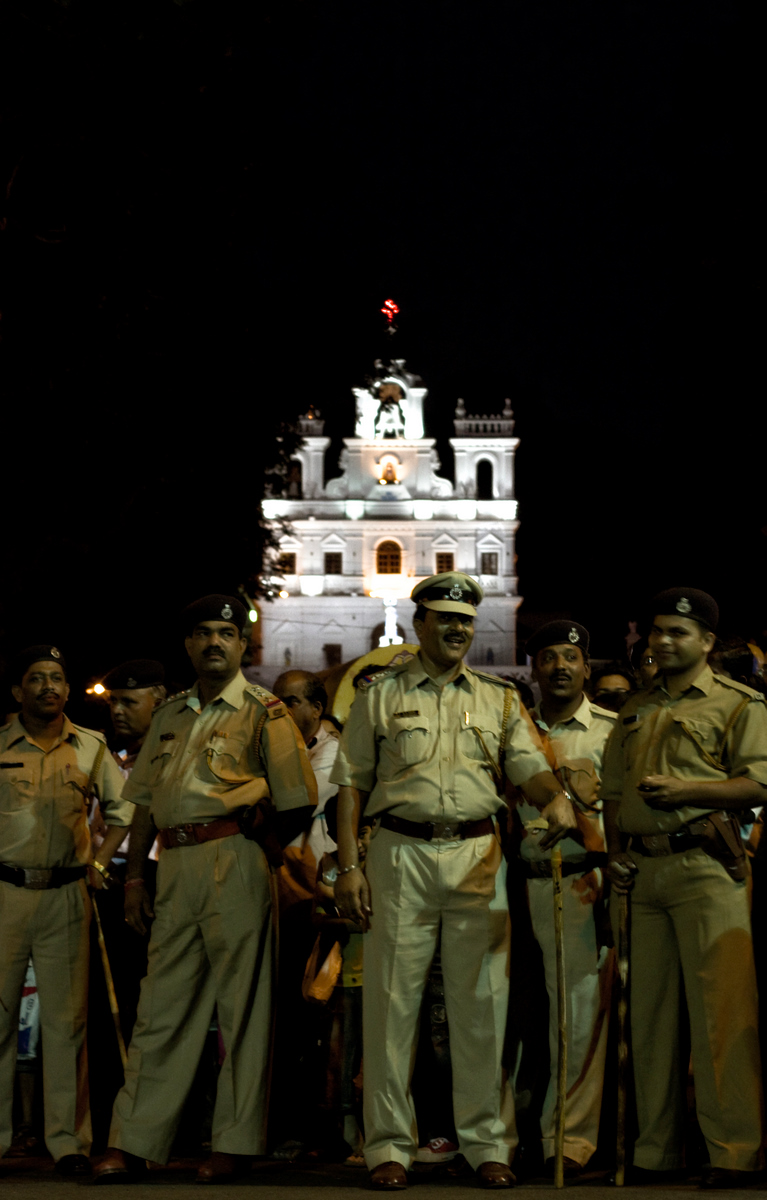
Panjim Church by Abhisek Sarda / CC by 2.0
Numerous cases have not made it that far. A 2016 report suggested that when higher-ups of the church are alerted to these incidents, they often choose to either ignore them or, at the most, transfer the perpetrator. Sr. Kulapuram says that a fellow nun was videotaped while bathing by a seminarian, while they were both attending a seminar away from home; she was dissuaded from pursuing the legal route and told that she’d get justice from the church. This never materialised, the priest was sent to Rome to continue his theological studies, and the victim abandoned religious life altogether – a version of the familiar promotion-for-accused and demotion-for-victim model.
Things may have changed since the 1950s, when fellow priests are said to have advised Reverend Louis Brouillard, a serial child molestor in Guam, to do regular penance instead of stopping him. But abusers still tend to get off with minimal official punishment.
A case in point is the apparent reinduction of a convicted child molestor, Father Joseph Palanivel Jeyapaul, into the Roman Catholic Church of South India in January. One of his victims from Minnesota says that she was 14 when he first raped her in his parish office, and during the year-long period of abuse he forced her to say that she contributed to his becoming impure. Although Jeyapaul was sentenced to one year of prison in Minnesota, where he had been posted previously, in 2015 he served a shorter prison term under the condition that he would not return to work that kept him in contact with children. When he returned to India, a bishop lifted the five-year-old suspension, apparently in consultation with Rome.
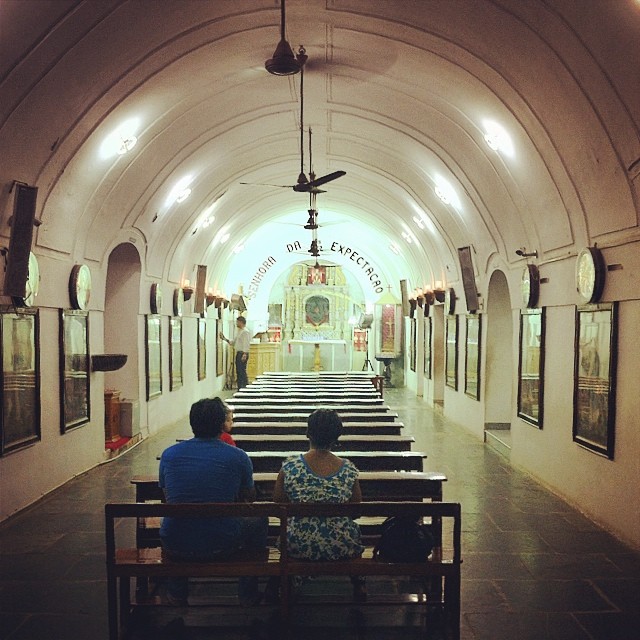
St. Thomas Shrine, Chennai by Ashwin John / CC BY-SA 2.0
This August, Shanthi Roselin took on the Catholic church after an investigation into the murder of her 17-year-old daughter by a Walayar priest in Kovai, Tamil Nadu three years ago revealed that church authorities were very much aware of her having been sexually assaulted. Strangely enough, they reported it to Rome while hiding the information from the local police. An Indian Express report describes Roselin reiterating how unfathomable the priest’s breach of trust was by stating repeatedly, “He was our God”. The police finally arrested five Catholic priests associated with the intentional omission of crucial information about the girl. But the leniency and the long delays give perpetrators ample time to threaten their victims. This was frighteningly apparent in a case where a Catholic priest in Kerala, who had abused a man for over a year, had his brothers intimidate the victim with death threats and demand that he withdraw his complaint to Church authorities.
Another in-depth study of sexual abuse by the clergy cited Virginia Saldanha, who had worked for years with the Federation of Asian Bishops’ Conferences, and said that the frequent cry about sexual assault complaints being dealt with ‘in-house’ really meant that the victim would be harried.
The Catholic Bishops’ Conference of India announced in August that it was going to draft a policy after a letter from the Forum of Religious for Justice and Peace, an advocacy group for religious women, told them that the number of cases of sexual abuse were increasing. Bishop Theodore Mascarenhas, the secretary general of the Catholic Bishops’ Conference, said the tentative title was ‘Policy on Sexual Harassment in Work Places’, suggesting it would mirror the policies used in other work places. He was vague about the contents of the draft, but insisted it would address sexual harassment in the Church “systematically and comprehensively”.
Others have rather less faith in the glacial pace or trajectory of the Catholic Church. Because the Lord may move in mysterious ways, in September, Astrid Lobo Gajiwala, the head of a Christian women’s collective, argued at a meeting of Christian women’s groups in Hyderabad that individuals should move outside the Catholic Church and follow the law. The meeting ended with the decision to start a legal subcommittee under the Indian Christian Women’s Movement to record cases of harassment and assault, provide counseling for victims and introduce new protocols for dealing with sexual abuse.
In 2015, Spotlight took to the big screen the real-life cover-up of decades-long child abuse by Roman Catholic priests in Boston. When the film was released, the Boston archdiocese told the media that there is “zero abuse” taking place today – sounding about as believable as the statement made in April this year by Philemon Doss, the president of the Conference of Diocesan Priests of India: “In India, it [child sex abuse] is not very rampant, maybe in foreign countries [it is].”
That the Vatican formally created a church tribunal for addressing and holding accountable bishops who were involved in cover-ups of sexual assault only in 2015 is appalling. Perhaps the guidelines for tackling sexual abuse that were formulated by the Catholic Bishops’ Conference in late September will resemble the policies used by other workplaces. But the situation at the moment, as Shalini Mulackal, the first female president of the Indian Theological Association, confirms, is that nuns rarely disclose incidents because of the surrounding taboo. When they do, the bishops in charge don’t do much besides transferring the priest accused of sexual abuse or offer him counselling. Or send him on a Roman Holiday.
Co-published with Firstpost.
The post How Does the Church in India Still Have the Nerve to Protect Sexual Predators in its Ranks? appeared first on The Ladies Finger.
]]>The post In 1961, I Became the First Girl in My Village to Go to Medical College. Everyone Assumed I Had Run Away to Become an Actress appeared first on The Ladies Finger.
]]>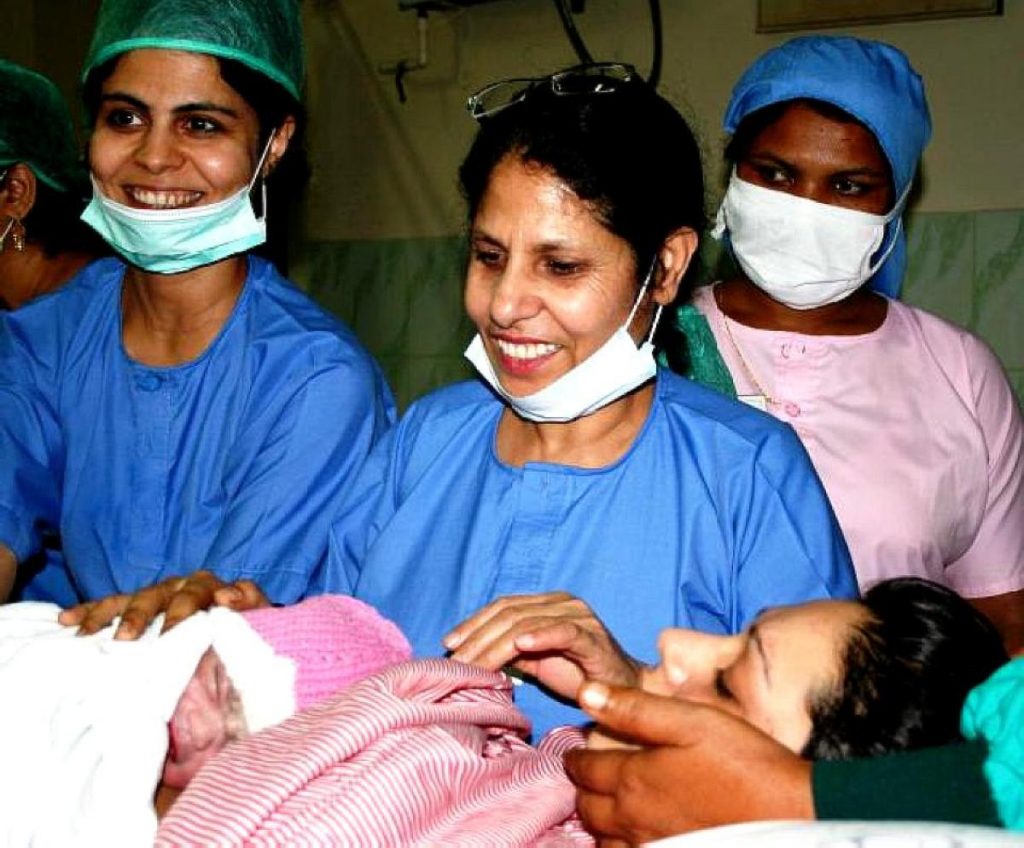
Photo courtesy Pixnio
My father cut quite a figure with his Marco Polo cigarettes in shaheb tins, and the ever-present smell of Dettol. He was the only doctor for 25 villages in the area. We lived in a village called Kanphala, near Nabagram, Murshidabad in West Bengal. Patients came from miles away in cattle-drawn carts and palkigaris. Some would even row over the Ganga in boats.
I was fascinated by my father’s work. This was a time when malaria and cholera were floating around, and a medicine for typhoid hadn’t been invented yet. There was a tall tree in front of the house, and my father used to hang his bottles of medicine on the branches and do the saline for cholera patients while I held their hands.
But you could only study up to class IV in my village, and then you would have to walk two miles to do V and VI. My father was very fixated on the idea of us studying in Kolkata, where he believed the education would be far superior, and so I went there in class VI and stayed in a hostel. My resolve to become a doctor became stronger while studying there.
I enrolled for the pre-medical course in Presidency College, Kolkata in ’61. Our batch had about a 100 students, 26 of which were women. Six more dropped out in the first two years and 20 went on to do the five-year medical course.
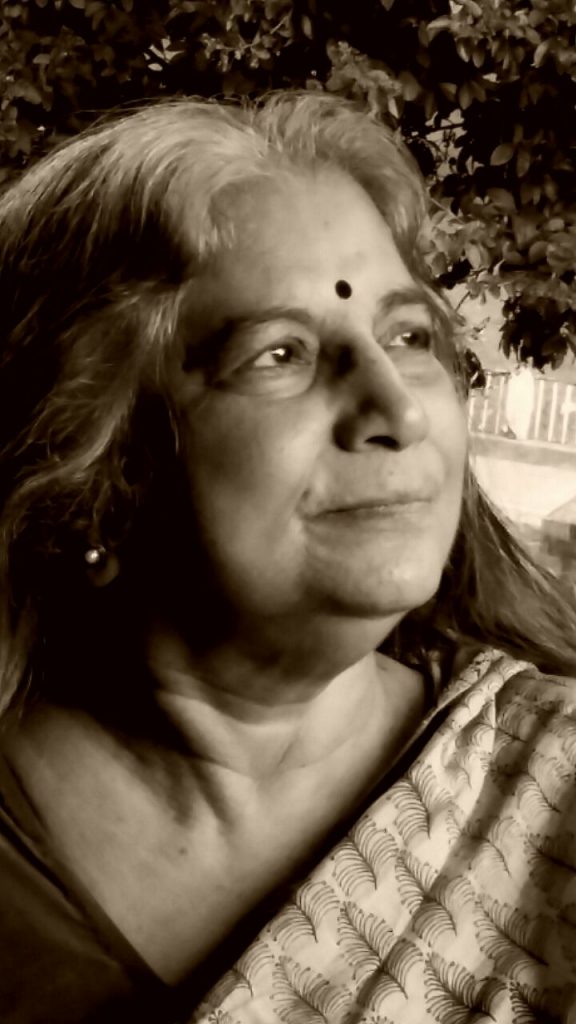
Rekha Ghosh. Photo courtesy Rekha Ghosh
I became the second girl in the entire district to study in medical school, but the journey wasn’t an easy one.
The most fervent objections poured in from the family and people in the village; apart from my father, no one was keen on the idea of me as a doctor. Their quibbles were, let us say, less than logical.
Take my didi ma’s (mother’s mother) objection. She had a theory that all doctors smoke cigarettes. If a woman was to study to become a doctor, taking up smoking would be a necessary rite of passage, she believed.
Another widespread belief was that only women who weren’t good looking were fated to become doctors. Then there were the people who imagined that all women doctors would inevitably end up as midwives. There weren’t many female doctors around in those days so I supposed it was hard to imagine what you hadn’t seen. (There was one in Baharampur hospital, in fact, but she was European. I observed her one time when she came home to do a check-up for my didi, and was enthralled by her bag and equipment. I remember deciding that if I grew up to be a doctor I would have a bag like that.)
But everyone’s biggest grouse against medical school was that I’d have to sit next to boys in class, cheek-by-jowl to boys on wooden benches.
Little did they know.
Having been to an all-girls schools, for many of us it was the first time we had any interaction with boys, anything to do with boys. But you couldn’t really call what we did ‘interaction’ at all.
We women students would either enter class with the professors or wait around outside until they came, and then stomp up to the head of the class in our saris. Either way it was ensured our ever-shrinking flock was never unchaperoned among male students. The Kolkata girls weren’t as shy around the boys.
But we wouldn’t breathe a word to the boys. You lived in different hostels (in fact, rumour goes that at the height of the Naxal movement in ’69 and ’70, fighters would land up to eat at the women’s hostel in Calcutta hospital because they wouldn’t be watched that carefully). There were separate canteens for boys and girls.
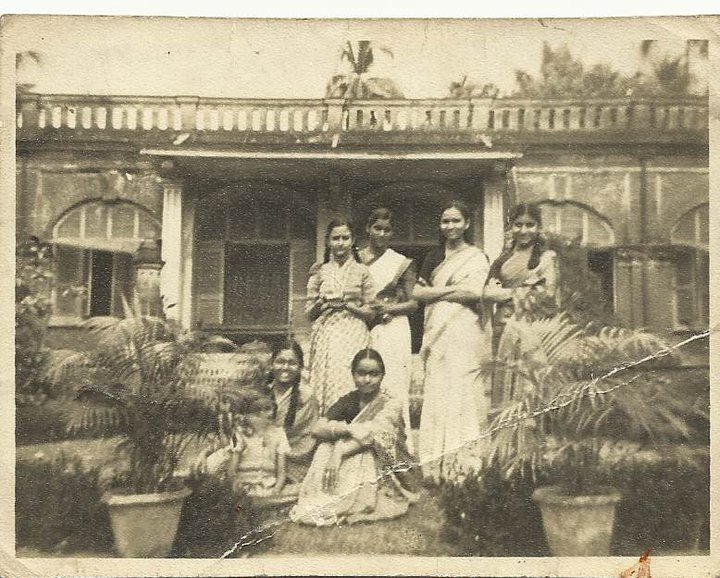
Rekha Ghosh (far right) and ‘gang of girls’ in the hostel. Photo courtesy Arundhati Ghosh
For the most part, the boys behaved really well, but senior girls would terrorise you if a boy talked to you, even if it was just to give you his notebook. “Ei Rekha khaata ditey cheyechhe?! (Hey Rekha, he’s giving you his notebook?!) Have you come here to study or to get a boyfriend and squander your parents’ money?” they would demand.
While our own bodies were fiercely guarded, medical school ensured some unguarded and embarrassing interactions with other bodies. Dissections. It was often eight people huddled together in a cramped space. I wonder what was worse, shoulders touching that of a boy, or shoulders touching that of a boy while standing over a naked body. Often us girls would wait until the boys were done with the dissection, and then do it on our own.
Things changed somewhat in the third year, when we began the clinic work for surgeries, psychiatrics, and studying venereal diseases. I had a hard time because we were split up according to our surnames, and I ended up as the only girl with seven other boys. It was intensely uncomfortable, and if I reached class early I would just keep mum. Often when I was taking the case histories of a TB patient, or noting the sexual history of another patient alone and with no nurse present, I wished and wished there was just one other woman.
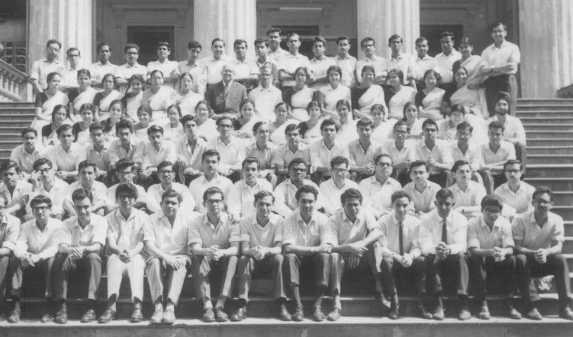
Batch of 1961, Presidency College. Photo courtesy Arundhati Ghosh
As much as I wished for more women in my class, my professors’ attitudes were not encouraging. Our male professors would make off-colour jokes about women taking up surgery to be able to cut fish better, or pharma to learn how to cook better. Almost all of them believed that women must become gynaecologists, and that women didn’t have what it took to venture into surgery or any other non-lady-like branch of medicine. (Dr Anjali Mukherjee was the only woman surgeon in our medical college, and you could count the women who weren’t gynaecologists on your fingers.)
Even the house staff period (when medical students train at a hospital and care for patients under the direction of doctors) — when you consider yourself a raja because patients think you’re an esteemed doctor already and your only interaction with the bosses is in the morning — was more difficult as a woman. We had a senior with a roving eye who would harass all the single women around, including the nurses, and your senior didis wouldn’t take you seriously if you complained, and most people didn’t complain anyway because they were terrified about their futures. I’d stay put in the labour room or with the nurses.
Back in college too there were lecherous and moody professors, who would insist on having women accompany them on night case watches and misbehave with them. When I was contemplating doing my MD under the guidance of one such professor, he said I should be a resident. I objected to living alone on campus because I was already married and living with my husband at the time, (I got married in ’65), and he said, “Why are you wasting your life over a classmate?”
I remember perching on dhekis (an agricultural tool used for threshing) and trying to convince people about infant mortality and immunisation, about eating iron and folic acid tablets, and finally, about condoms.
One time we were instructed to do a field-visit in an area called Jhingrimalla, and the village residents locked us into the school because they were suspicious about our intentions. Eventually my colleague called the Assistant Deputy Magistrate, whose wife was a friend (I had delivered their child at the government hospital). Then the police came to rescue us.
I spent 7 years in Asansol and then left for IISCO, an industrial hospital in Burnpur, in 1977.
Working as a woman doctor for employees at IISCO was a whole new ballgame. The emergency rooms were intimidating to say the least, because during night duty there’d be alcoholics, suicide cases, gang-related knifing incidents, mentally unstable people in one room and pregnant mothers in the next room. I had to do everything from sterilisation (the most sterilisation operations I’ve done is 50 in a day but unlike the horror stories you hear today, we were firm about always doing them on sterile hospital premises) to anti-natal checkups, health and family planning, and immunisation for kids.
Once AIDS broke out in the ’90s, we conducted awareness camps for the workers and all the villages within five kilometres of the hospital, which were funded by the central government.
Suspicion of lady doctors and their interference remained a staple of my life. My husband always warned me that one day I’d get beaten up by the women patients’ husbands and in-laws, because they hated me for my suggestions about how women should be treated during their pregnancy, and the fact that I would refuse to do forced abortions. Men would come to fight with me about my recommendation that their wives drink milk, or insist that I must be a bad influence somehow on their wives who were now refusing to do housework while pregnant. What made the women’s relatives really furious was that I refused to hand over any money to them — because the government provided the fee for each patient’s sterilisation operation, as an incentive and to ensure they got enough food after the operation. Often husbands or in-laws would take the money while the patient was unconscious, but I never agreed to that. I had no way of knowing whether the money was forced out of them later, but I would wait for them to wake up and hand it over.
What did I feel about departing from beliefs that I too had grown up with? I think I felt my way through them. I remember my first MTP (Medical Termination of Pregnancy) vividly. It was the early ’80s. A woman from Itthoragram, a village in Asansol district, came bawling to me. She was three months’ pregnant, and said she’d had three daughters already. “I know this one is a girl too, and my husband will kick me out.” She requested an abortion. I was up all night wondering if I should go through with it — one of the reasons I had been apprehensive about being a gynaecologist was having to do MTPs where women were under pressure to abort — but eventually I thought long and hard about her situation and decided she didn’t have a viable alternative.
It wasn’t the first or last case. One time a woman, the wife of an IISCO employee, who was too old to have a safe pregnancy, came to me early in her pregnancy and I told her not to go through with it. She went back to her village and then returned when she was five months’ pregnant. She said she had three daughters and had been told this one would be a boy. By then it was too late to do anything. She was adamant on going through with the pregnancy despite my protestations. She bled to death on the delivery table. I was devastated. I couldn’t eat for a few days.
Soon after, I heard that the husband was planning to marry again to raise the child (it was a boy), his logic being that they were from a Purohit family and needed a boy to be raised the right way. I dragged him to my boss and said I’d provide a certificate stating that he killed his first wife if he dared to get married again. Unsurprisingly, my boss told me that I had acquired the notorious reputation as a doctor who is “very good for the patients but bad for the in-laws and husbands”.
I was awarded the best medical officer in the district in Asansol, before leaving for IISCO. My father was extremely proud of me and wanted me to transfer to a hospital in Baharampur. After I left, many more women doctors joined the Asansol hospital. By the ’90s, almost all the health centres in villages had women doctors too. But no other woman from my village has become a doctor yet — I would love to hear of one before my time is out.
Not that my decision to venture into a medical degree was instantly applauded. It was only after I got my MBBS in 1965 that people from my village believed that I really was studying to become a doctor. Until then, they’d been sure that because I had left the village for Kolkata, the hotbed of sin and vice, I had got into the film industry.
Daktar babu’r mein toh cinema korchhen. (The doctor babu’s daughter is an actor), they used to tell each other.
(As told to Maya Palit)
The post In 1961, I Became the First Girl in My Village to Go to Medical College. Everyone Assumed I Had Run Away to Become an Actress appeared first on The Ladies Finger.
]]>The post Share the Load or Scram. Quora Has No Time for Indian Men Who Don’t Want to do Housework appeared first on The Ladies Finger.
]]>
Photo courtesy Wikimedia Commons
Why should you as a husband claim 50 percent parentage rights over your children when all that you contributed was one tiny wriggly sperm and that too by a mere reflex action after passing your time most pleasurably while your wife bore the full brunt of a nine-month pregnancy culminating in excruciating labour pains and also nursed your children during the most difficult weeks after delivery?”
This piece of rhetoric appeared on Quora and its author wondered whether he would be “downvoted and collapsed”. It was the opposite — at the time of writing this, Gopalkrishna Vishwanath’s (he describes himself as ‘never dated anyone but happily married’) post has 94,000 views and 10,471 upvotes.
But Vishwanath’s post is just one of the recent barrage of replies to a question that set Quora — a desi go-to for life, the universe and everything — on fire.
The original question was posted anonymously by a man who wondered whether there was anything wrong with him telling his future wife that he has no intention of contributing to household duties because he earns five times as much as her (20 lakhs as opposed to a measly 4).
“Why should a husband share household chores if his wife doesn’t earn even half of his salary and is working just to pass the time?” he asked.
Photo courtesy Pixabay
The discussion has gone viral with almost 1 lakh views and over 100 answers, all of which take on the idea of labour in the house, why it always falls to women, and how the irrelevant caveat about his wife going to work because she would find staying at home tedious, has little to the fact that housework should be shared.
Unusually, much of the flak being directed at the user who posted the question is coming from Indian men. Some, like Vishwanath, are jocular, saying that the man should have been flat-out rejected, that he is too naïve to know the difference between real life and a balance sheet, or, that he is clearly more wrapped up with getting domestic work done than seeking a relationship with a partner.
Others have fearlessly plunged into psychoanalysis and sociological musings, such as “this question is a result of extreme naivety coupled with the modern (mis)conceptions of equality” and “I sometimes keep pondering on why do people get married anyways?”
Some people suggest the man felt threatened because he had assumed he would be the ‘dominant’ partner because he earns enough to be able to offer the woman the option of not working. (In a similar thread on Reddit however, lots of men say that if the man bought the house then the woman shouldn’t complain about doing basic housework). And a few have talked about having learnt from observing their patriarchal fathers bullying their mothers into doing the housework, and explain that they’ve learnt a little about contributing to household duties.
‘Share the load’, incidentally, was the tagline of a viral Ariel ad last year, which showed an old man feeling pangs of remorse watching his daughter juggle all the household chores while on a work call, and deciding to chip in as well.
The hassle with the ‘do your bit’ logic is that it still relegates the task of planning and running of the household entirely to the woman. And things tend to snowball out of control much quicker when there are children involved.
A recent comic by a French artist, who goes by the moniker Emma, about household labour being done by women provoked discussions about the subject too. It spells out how “you should have asked! I would have helped” is a favourite male retort to the accusation that they’re not doing enough to help with the kids. This logic doesn’t really hold up at all because the assumption is that the woman has to play the household manager, a project leader of sorts who looks over the execution of tasks, when in reality, as a new parent, she is equally clueless and fumbling.
Overseeing everything translates into a whole extra amount of work, but otherwise, it wouldn’t get done. Emma jokes that girls aren’t predisposed to loving vacuum cleaners, but locates much of this attitude in the way children are brought up, where girls are socialised into doing certain household chores. (In resettlement colonies in Delhi for instance, as this article in The Wire revealed, one of the reasons girls are still expected to drop out of schools is to share the domestic duties with the parents.)
Every so often there’s a study about how women do x number more hours of household chores than men, and how that imbalance can be the catalyst for a miserable marriage. (A New York Times piece during the Women’s March in January riled up scores of parents when it read like Haruki Murakami’s Men Without Women with its exaggerated take on how some posh men struggled to handle their kids while women participated in the march). And earlier this year, The Conversation published a study about how men are much more involved in parenting today but women are increasing parenting time too, and women still do far more of the ‘worry work’, including managing and organising tasks.
Of course, things are different in India, where plenty of the manual labour in the middle/upper-middle class families is shunted onto domestic workers. Even so, data from the National Sample Survey Office suggested that over 60 percent of adult women in the country are engaged in unpaid household labour and a majority of these women said it was because no other member of the family helped with the chores. The data on how much time Indian men spend on domestic chores is sparse, but this OECD survey from three years ago suggested that the average was only 19 minutes a day while women spent up to 298 minutes. (A McKinsey study from last year said the ratio was closer to 53:249.)
Things might be changing, and I’m not referring here to the posters that surfaced for A Gentleman earlier this month, which had Siddharth Malhotra holding a utensil in one hand and a gun in the other. (“Pressure cooker se leke bandook” — he can use both, went the congratulatory tweet accompanying the poster).
It’s because, if this Quora discussion is anything to go by, people are being vocal about the skewed participation of men and women in household chores. The sweeping studies insisting that if Indian men helped out more in the house it could add 16 percent to the country’s GDP might be too panoramic to cut it — it’s unlikely that thinking about the country’s economic advancement will remind you to take out the garbage. But men in online discussions are seriously challenging other men’s assumptions that a woman doesn’t have the right to say her domain isn’t in the kitchen if she earns peanuts by comparison. Now, it’s about time the discussion shifted to addressing whether we can let women off the hook as project managers too.
The post Share the Load or Scram. Quora Has No Time for Indian Men Who Don’t Want to do Housework appeared first on The Ladies Finger.
]]>The post In Just One of Several Witch-Hunts This Month, a Doctor Slapped a Woman Who Was ‘Possessed’ appeared first on The Ladies Finger.
]]>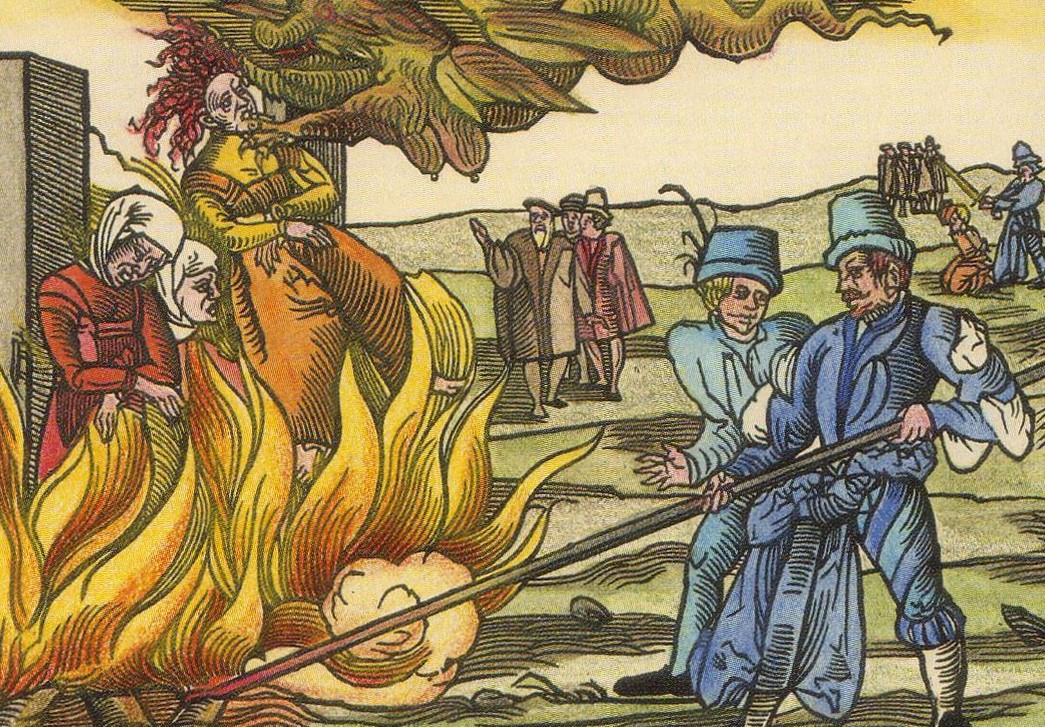
A drawing of a witch-hunt. Photo via Wikipedia
The abuse and killing of people accused of practising witchcraft or being possessed has reached grisly heights this month.
A video shot in Rajasthan that is doing the rounds on social media shows a doctor slapping a woman whose family complained that she needed exorcising from evil spirits. He’s been suspended from the district hospital since.
Just this morning, The Times of India reported that two women from a Dalit family were apparently sexually assaulted and a 71-year-old father were beaten up in Pataudi, Haryana. The six people who beat them up were certain that the Dalit family sneaked into their yard, plucked limes from their plants, and cursed them with spells.
And last week, we heard about a horrific incident where two men in Bihar abducted their mother and forced her to consume shit. They did this after visiting an exorcist because their mother had been ill for a while, and his instructions were to get her to ‘drink human excreta’ and that would cure her from being mixed up in witchcraft. In Chattisgarh, they weren’t concerned about a cure: earlier in June, two women were viciously attacked because a mob believed they were wrapped up in black magic and was convinced that they had caused the deaths of members in their families. One was stripped and had chilli powder inserted into her genitals, the other was beaten to death and then set on fire.
We’ve talked before about the silence around these ferocious witch-hunts. But while we wait for the revised Bill (Karnataka Prevention and Eradication of Human Sacrifices and other Inhuman Evil and Aghori Practices and Black Magic Bill) banning black magic to be introduced into state legislature at the end of the year, reviving the discussion about the high number of attacks on people branded as witches is more urgent than ever.
The post In Just One of Several Witch-Hunts This Month, a Doctor Slapped a Woman Who Was ‘Possessed’ appeared first on The Ladies Finger.
]]>The post A New Book Tells Us Why the Victims of a Bloody Pogrom in Kandhamal Are Still Waiting Around for Justice appeared first on The Ladies Finger.
]]>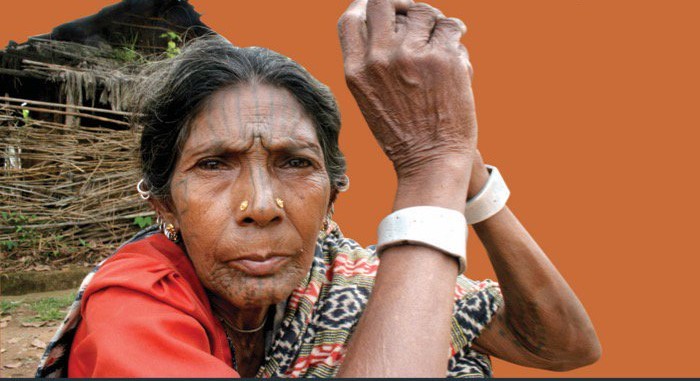
A woman from Kandhamal featured on the poster for the book launch. Photo Credit: John Dayal via Twitter
In December 2007, there was anti-Christian violence in Kandhamal, Odisha. In August 2008, a widespread pogrom against Dalit and Adivasi Christians in the region left 600 villages ransacked, 295 churches and other places of worship destroyed, 5,600 houses in shambles, 2,000 trees uprooted, and 54,000 people homeless.
Apparently attacks had been planned extensively. Arson, rape, looting, and forcing people to renounce Christianity were part of the party too. Several persecuted families fled to Bhubaneshwar and elsewhere, others were stuck in refugee camps. Widows are still waiting for justice.
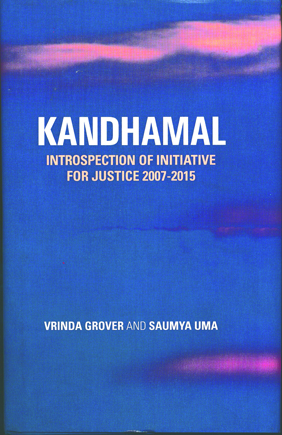 A book by the eminent lawyers Vrinda Grover and Saumya Una titled Kandhamal: Introspection of Initiative for Justice 2007- 2015 has tracked the giant delays and ‘diversionary tactics’ at play in the battle for justice, relief, and rehabilitation for the victims. It points out the gaping lack of a witness protection programme, a factor which assisted the mass acquittals, and the dubious counter cases against victims. It also highlights the hesitation to admit that the violence was communal.
The National Commission for Minorities, stated categorically that Sangh Parivar organisations and the anti-conversion campaign fomented the violence, and suggested that there was an economic motive as well because Bahmunigaon a prosperous Dalit locality was ravaged.
But commission set up to investigate the 2007 violence took several years to revert with its inquiry report, while a second commission apparently chose not to emphasise the involvement of Hindutva groups in the violence. The judge overseeing the second is reported to have said “Communalism is not the primary reason for the riot.The problems began ages ago. It can be attributed to the bitterness of the two communities.”
According to the book, the National Human Rights Commission inquiry was contradictory in parts and also had dodgy aspects to it, like its portrayal of the murder of a 20-year-old woman: “Instead of condemning the heinous killings in strong terms and recommending accountability of the perpetrators, NHRC says they sacrificed their lives, covering up the heinous and barbaric nature of the killings.” When a brutal murder is refashioned as a sacrifice by a human rights commission, you realise you’re only scraping the tip of the iceberg.
The post A New Book Tells Us Why the Victims of a Bloody Pogrom in Kandhamal Are Still Waiting Around for Justice appeared first on The Ladies Finger.
]]>The post Apparently, Sex in Advertising Doesn’t Sell Anymore. So, What Does? appeared first on The Ladies Finger.
]]>
Big Kahuna Burger ad. Photo via Flickr. CC by 2.0
That sex in advertising and headlines sells is an old, old platitude. But a new study appears to be deflating that notion.
According to a study conducted by researchers at the University of Illinois, people do tend to remember ads with sexual appeal or half-naked models. But that does not necessarily translate into loyalty and interest in the brand, or more people buying the product. And sometimes, it even put people off the products.
With the Indian ad industry heavily sexualising every female celebrity from Katrina Kaif drinking mango juice to Deepika Padukone licking Dairy Milk off herself, will this market study give advertisers writers’ block forever?
Maybe another trend will jump to its rescue. ‘Femvertising’ is getting pretty big in India, as every kind of product from shampoo to washing machines are using that very slippery phrase ‘female empowerment’ to sell their wares. So Dove India has a campaign which rails against Indian standards of beauty by featuring a montage of women with different skin complexions and body types.
And on Women’s Day this March, Oriflame’s ad highlighted the difficulties faced by women (or to be more precise, Superwomen) juggling a career and all the housework. You could accuse some ads of latching onto the women empowerment bandwagon, and the UN ‘unbeatable woman’ ad last year is a prime example of how that works. But others, as a recent study in The Conversation concludes, have at least begun to provoke conversations that needed to happen — Biba’s Change is Beautiful campaign, for instance, talks about arranged marriage or dowry and men’s complicity in it.
Will the new shifts in consumer reactions to ‘sexy’ ads give us a future in which ads that do not hyper-sexualise women is a real possibility? Or will the new ‘female empowerment’ ad brigade replace them, and is that something to celebrate?
The post Apparently, Sex in Advertising Doesn’t Sell Anymore. So, What Does? appeared first on The Ladies Finger.
]]>The post After Everything She’s Achieved, Some Men Are Still Obsessed with Defeating Serena Williams appeared first on The Ladies Finger.
]]>
Serena Williams. Photo courtesy Serena Williams Facebook page
After all these years people are still expending energy wondering how Serena Williams’ blazing career would have tanked if she had played against men.
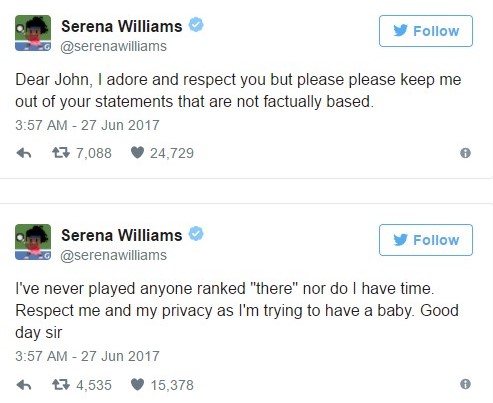
In an interview with NPR on Sunday, the former tennis champion John McEnroe held forth about how Serena was the greatest female tennis player of all time — a caveat that she has railed against in the past. According to McEnroe, though, “if she played the men’s circuit she’d be like 700 in the world”.
After he was badgered to explain what he meant, McEnroe only got himself into more of a hole. He meanders from saying that his kids don’t believe that he could beat Serena anymore to explaining how he is still a staunch feminist, to talking about how Serena has incredible mental strength and is a fantastic player who could possibly beat some male players.
He also jokes, “Maybe I should get her now because she’s pregnant”, and in a random aside, clarifies “I suppose anything’s possible at some stage” when asked about whether he thinks women are incapable of defeating men on the circuit. Maybe he’s thinking of a world where people don’t feel the need to comment on Serena’s nipples. (Incidentally, in 1973 when the female tennis player Billie Jean King beat a former no. 1 player Bobby Riggs, the broadcaster suggested how she could make herself even more attractive: “If she ever let her hair grow down to her shoulders and took her glasses off, you’d have somebody vying for a Hollywood screen kiss.”)
Having won 23 grand slam titles probably gives you more than a little leverage, but Serena was calm and shut McEnroe down politely enough, essentially saying she didn’t have time to spend over his speculation about how low on the ranks she would score.
The post After Everything She’s Achieved, Some Men Are Still Obsessed with Defeating Serena Williams appeared first on The Ladies Finger.
]]>The post Draupadi, Gandhari, and Kunti Want to Know How to Make the Perfect Cup of Chai and Be Good Millennial Wives appeared first on The Ladies Finger.
]]>An illustrator and recent graduate from Srishti, Pune-based artist Annushka Hardikar is taking on weird myths about virginity, hymen restoration, and what you should eat when you’re pregnant in her new satirical e-zine ‘Oh Nari So Sanskari’.
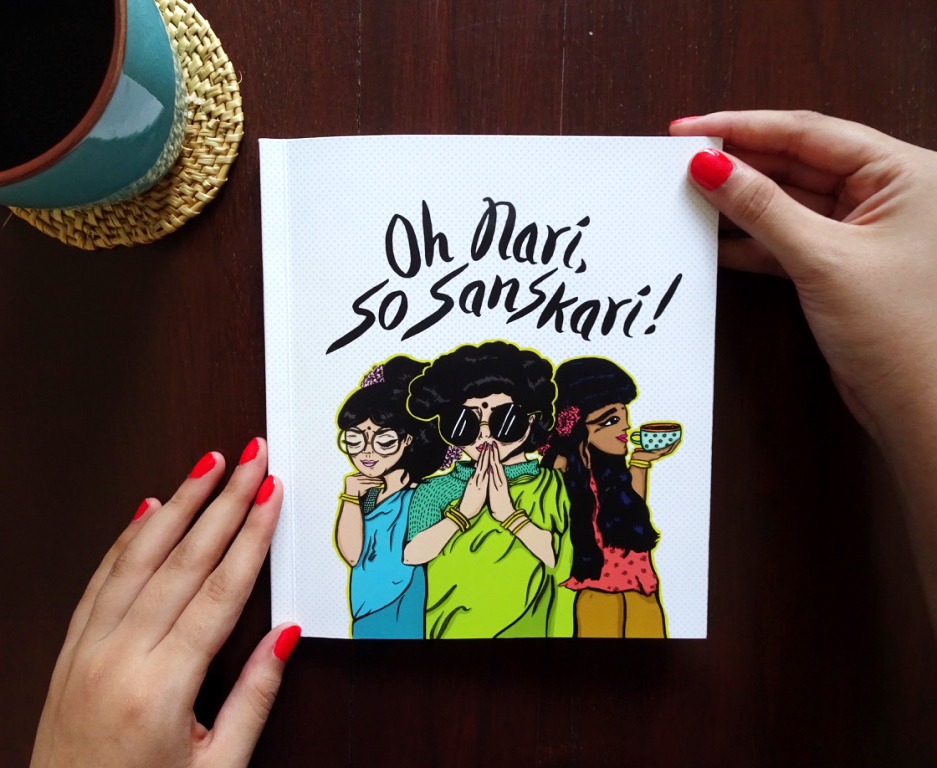
Photo Credit: Annushka Hardikar via Behance.net
It revamps characters like Draupadi, Gandhari, and Kunti from the Mahabharata, by making them central figures on the covers of a women’s magazine which gives out bizarre advice on how to be a millenial good wife, erase all your memories of sex, and make the perfect cup of chai.
Hardikar decided to reinvent these women characters because it irritated her that across all the versions of the Mahabharata that she read, the women were were powerful figures, but their desires and inner lives weren’t extensively explored.

Photo Credit: Annushka Hardikar via Behance.net
Instead, Hardikar decided to interview a hundred women about the challenges they face today, from harassment to the clothes they’re allowed to wear and the other boxes they have to tick to please their families. From the list of responses, she carved out various stereotypes tied up with the idea of being an Indian woman and these helped her with refashioning her e-zine’s protagonists and the obstacles they face. Read more of the e-zine’s panels here.
The post Draupadi, Gandhari, and Kunti Want to Know How to Make the Perfect Cup of Chai and Be Good Millennial Wives appeared first on The Ladies Finger.
]]>The post Tubelight: How Man-Child Salman Khan and an Actual Child Became Friends Thanks to ‘Bharat Mata Ki Jai’ appeared first on The Ladies Finger.
]]>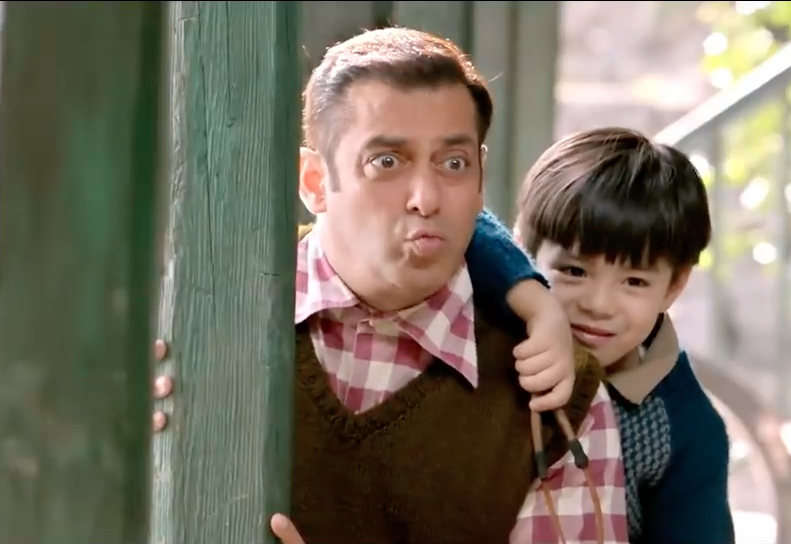
Photo courtesy Tubelight Official Teaser via YouTube
It’s a little ominous when the good-hearted hero taking on an aggro jingoist in a film is big on the phrase ‘Bharat mata ki jai‘. It’s even direr when the hero asks his friend, an Indian-Chinese child, to repeat the phrase to prove he is Hindustani at heart. When the child yells it so loudly and proudly that he scares away the grazing sheep, there isn’t much to do except perhaps check your watch and gulp as you realise that the interval is still a good way away.
Kabir Khan’s new film Tubelight, starring Salman Khan, tries to showcase a friendship between a man with the brain of a child, and a young boy who is apparently from the ‘enemy’ camp. It’s an adaptation of Little Boy, a 2015-war drama, where a child from a small town cultivates a friendship with a Japanese-American man who is ostracised by the rest of the town’s inhabitants because World War II is on and tensions are sky-high. It’s infused with Christian moralism because it shows the child trying to follow the corporal acts of mercy to persuade God to bring home his soldier father. And making friends with the outcast Japanese man is an instruction from his local priest.
Replace the Catholic god with Gandhi, the setting with the Indo-Sino war, and the young boy with Lakshman (Salman Khan) yearning for Bharat — his soldier brother — to return and you have the set-up of Tubelight. After his benevolent uncle (Om Puri) suggests that following Gandhi’s tenets about loving your dushman will bring home his brother from the front, Lakshman is adamant to befriend Guo (Matin Rey Tangu) and his mother Lilin (Zhu Zhu).
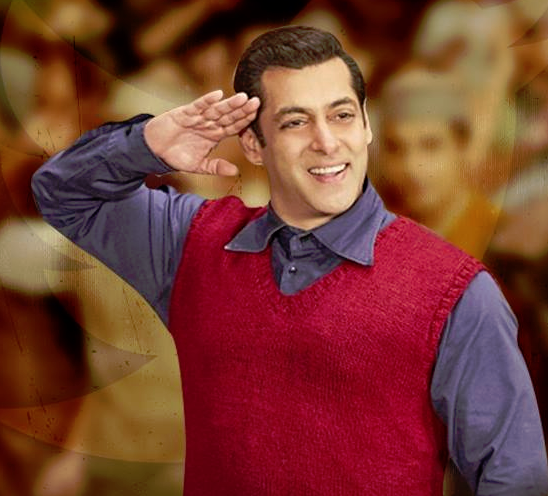
Salman Khan via Tubelight Facebook page
Kabir and Salman have already ‘done’ Pakistan and cross-border friendship with Bajrangi Bhaijaan, where a young mute Pakistani Muslim girl makes friends with Salman, a rabid Hanuman supporter and the son of an RSS member, who saves the day (and her) by putting aside political differences. And this film might have had the same ‘transcending state enemies’ mould, except that it goes to a huge amount of pain to make it gobsmackingly obvious that Lilin and Guo aren’t dushmans at all. They might look different, sure. But what’s a little ethnic difference when you speak impeccable Hindi, estrange yourself from all Chinese family ties, cry copiously at the funerals of slain Indian soldiers, and scatter hungry ewes from their pasture with your patriotic bleats? “Hum Hindustanti hai,” say Lilin and Guo, and boom, you have a picture-perfect conversion as seamless and non-threatening as the Kumaoni landscape of the film.
Does the film have a more nuanced take on its other friendships? Not really. Bechdel test toh bhul hi jao, because apart from Lilin there’s only one other woman character Maya, whose role in the little screen time she gets is to cry often and watch out for Lakshman (she’s instructed to do this by his uncle). At the heart of both the film and its public appeal is the unshakeable bromance between Lakshman and Bharat, who adores his brother and patronises him only a little for being slow. (A photo series posted by Salman of the bhaigiri on the sets has gone viral on Twitter.)

Sohail Khan, Salman Khan. Still from Tubelight via Twitter
This dynamic could have been sweet and genuine, if it didn’t look — as this amazing review points out, and my friend bellowed at the screen — like two “grown ass men” rolling around the countryside in shorts, doing goofy dances to pretty good songs, horse riding, and perfecting a Calvin-and-Hobbesesque jump off a cliff into a river. That’s because Salman Khan is wholly unconvincing in the role he’s trying to pull off as someone with developmental disabilities (so much so that this reviewer isn’t being ruthless when he says it looked like Salman aimed for a Forrest Gump and ended up with worse than Hrithik in Koi Mil Gaya), and looks and sounds constipated most of the time.
It’s only towards the end of this very long film (just shy of 3 hours) though, that you gauge exactly how much of a sham the friendship between Lakshman and the ‘outsiders’ is, especially when Lilin and Guo accompany him, for no reason at all, to the front where he reunites with his soldier brother (whom they haven’t even met before). As the camera cuts between them and a jubilant Salman, they cry when he cries, they look elated when he does, after realising his brother isn’t paralysed from the war. The actors are great, but they ultimately become flat mirrors to bhai’s emotions. The bad Chinese soldiers are nowhere in the picture, and the solidarity between the Indians and these Chinese-but-not-really duo who is Hindustani at heart is set in stone.

Salman Khan. Still from Tubelight via Twitter
It would be an understatement to say that we are at a time when engaging with political and communal differences (or indeed with dissent) in India is being trapped inside a cauldron at boiling point. It was already way past the simmer when, last year, Baba Ramdev said that if there wasn’t a law restraining him, he would order the beheading of anyone who didn’t say, “Bharat Mata ki Jai”. And a more measured response from him recommended that the Centre put in place an amendment to promote the chant. That was followed by the Bollywood veteran actor Anupam Kher confirming this year that the phrase is the only definition of nationalism in India.
Salman Khan’s character isn’t that bad, you could demur. No, he doesn’t want to decapitate lakhs of people for not saying ‘Bharat Mata ki Jai‘ (the only violent instinct he shows is during a derailed attempt to set Guo’s house on fire at the beginning of the film). But his unwavering love for the Indian Army (never mind that it conflicts just a little with the ‘pacifist’ ideology he’s also striving to follow) and the fact that he lets Narayan (Mohammad Zeeshan Ayyub), the jingoist bully, get off lightly despite his attempts to murder Guo’s family, say something for a film hinged on clear-cut symbolism. They create an unspoken but apparent feeling that wearing nationalist pride on your sleeve is a precursor to establishing any common ground, and so, set up strange and terrifying prerequisites for friendship.
The small mercy? That there’s only one competition in the film about who can yelp “Bharat Mata ki Jai”, louder. If there had been another, the sheep wouldn’t have been the only ones sprinting the scene.
The post Tubelight: How Man-Child Salman Khan and an Actual Child Became Friends Thanks to ‘Bharat Mata Ki Jai’ appeared first on The Ladies Finger.
]]>The post In New Hampshire, a Legal Error Almost Let Pregnant Women Murder Whoever They Wanted Without a Jail Term appeared first on The Ladies Finger.
]]>
Photo via Pixabay
Earlier this year, a graphic novelist took on legalese.
Robert Sikoryak, an American artist, transformed the dense iTunes terms and conditions agreement which is 20,000 words long, into a bizarre parodic novel. He says in an interview that his favourite line in the ‘unreadable’ terms and conditions is a clause about promising to refrain from using iTunes for nuclear weapons: “You also agree that you will not use these products for any purposes prohibited by United States law, including, without limitation, the development, design, manufacture, or production of nuclear, missile, or chemical or biological weapons.”
Sikoryak jokes about making obscure legalese accessible, but perhaps workshops on it wouldn’t go amiss in New Hampshire, where a draft of a rapidly drafted bill about fetal homicide by New Hampshire Republicans left the legislators in a bit of a fix recently.
Since Senate Bill 66 would label a fetus as a person after 20 weeks of the gestation period, the idea was to introduce exceptions to exclude pregnant women and doctors from carrying out abortions. But the phrasing inadvertently made it sound like pregnant women and medical professionals assisting them could engage in homicide with impunity.
Surreal as it sounds, the now corrected version of the bill exempted “Any act committed by the pregnant woman: Any act committed at the request or direction of the pregnant woman or for the benefit of the pregnant woman,” which included homicide, manslaughter, and aiding suicide. On Thursday morning, the language of the bill was altered. Legal experts were quick to point out, though, that the loophole wouldn’t really have pardoned a pregnant woman for murder. But this proofreading screw-up has got everyone tripping on the idea of a potential Kill Bill-style situation of enraged and bloodthirsty women.
The post In New Hampshire, a Legal Error Almost Let Pregnant Women Murder Whoever They Wanted Without a Jail Term appeared first on The Ladies Finger.
]]>The post ‘Don’t Say Intercourse.’ The Latest from the Glorious World of CBFC Censorship appeared first on The Ladies Finger.
]]>
A still from Jab Harry Met Sejal. Photo via Facebook.
In one of the many trailers doing the rounds for Imtiaz Ali’s upcoming film, Jab Harry Met Sejal, Anushka Sharma gives Shah Rukh Khan an indemnity bond, because he’s warned her that he’s crap with women. It says that if there’s any sexual interaction between them, ‘amounting or not amounting to full intercourse’, he won’t be in any legal trouble.
But despite the fact that the trailer doesn’t have any explicit footage, the word ‘intercourse’ has annoyed the CBFC board and its chief Pahlaj Nihalani for being too vulgar, and they have ordered it to be cut from the trailer.
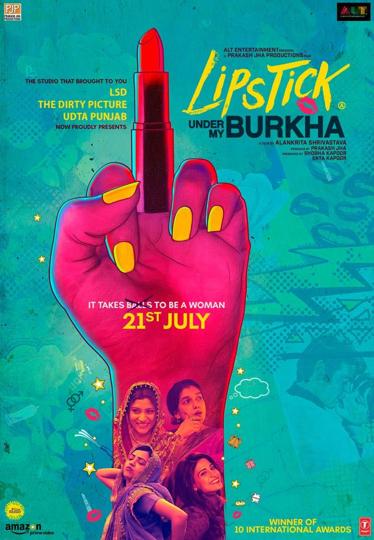 In the meantime, Lipstick Under my Burkha, a film that endured a long tussle with the CBFC but is finally releasing in July, has a new poster out. It is a hand holding up the middle finger which is shaped like a lipstick, and everyone is wondering whether it’s directed at the censor board. Nihalani flat out denied that that was possible, and according to a report in the Hindustan Times, also went on a tangential rant about the rites of passage you should complete before you can think about making gestures of defiance against conservative factions of society:
“Firstly I don’t think the finger is meant for us. It is meant for the public, for the aam junta who are bound to reject films that parade a fake social relevance in the name of women’s empowerment. You can’t empower women by making them wear lipstick. First give them basic rights, build toilets in every Indian home so that women don’t have to be publicly humiliated every day, then talk about showing the middle finger to the conservative elements whether it is the censor board or anyone else.”
Sounds like a pretty long wait.
The post ‘Don’t Say Intercourse.’ The Latest from the Glorious World of CBFC Censorship appeared first on The Ladies Finger.
]]>The post JNU, Rohith Vemula, Kashmir. Guess Why Films about These Issues are Being Mulled Over at Kerala High Court appeared first on The Ladies Finger.
]]>
Posters of three films that were not shown at the Kerala short documentary film festival.
Last week, the 27-year-old filmmaker Kathu Lukose was contemplating going to court.
The former JNU student’s documentary March March March was lined up for screening at the Kerala international short film festival (IDSFFK). That is, until the Information and Broadcasting Ministry refused to grant it exemption from a censor certificate.
Lukose’s 18-minute documentary explores the JNU protests of 2016, when ‘anti-national’ resurfaced as a favourite buzzword. It contains interviews and footage of public meetings, human chains, and campus-organised protests, and looks closely at clashes between student groups.
Of the nearly 170 documentaries at the festival, the only other films to be denied permission were about Rohith Vemula (The Unbearable Being of Lightness) and Kashmiri artists (In the Shade of Fallen Chinar) and it doesn’t take much extrapolation to understand that this is a clampdown not only on artistic freedom of expression, but on the issues these films explore and stand for. As this article argues, though, in some instances censorship like this only means more circulation for the films, and all three documentaries are now up on the Internet, and were also screened across Kerala.
While documentary filmmakers around the country have been protesting the clampdown on these three films, and those present at the Thiruvananthapuram festival protested on stage during the closing ceremony, there has been a new development in court. According to reports, on Tuesday, the Kerala High Court responded orally to the writ petition about the censorship, and said it was uncalled for. The Centre has been asked to file a counter-affidavit in the next two weeks, after which the court will pass a judgement.
But according to a Facebook post by Lukose, the appeal made by the Chalachitra Academy to the Ministry of Information and Broadcasting was rejected. And on June 18th, a written statement detailing why the documentaries were denied exemptions was provided. It claimed that films on issues about Kashmir might be ‘exploited by antinational elements’, while the other two, including Lukose’s film, ‘relate to students’ agitations in recent past which already had adversely affected the law and order situation in some parts of country including university campuses’.
The post JNU, Rohith Vemula, Kashmir. Guess Why Films about These Issues are Being Mulled Over at Kerala High Court appeared first on The Ladies Finger.
]]>The post This is How a Samajwadi Party Leader Got Bail Despite Being Accused of Raping a Woman and Molesting a Minor appeared first on The Ladies Finger.
]]>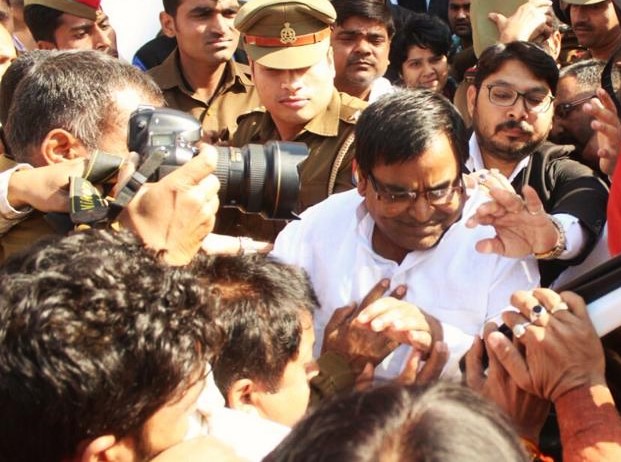
Gayatri Prajapati surrounded by the press. Photo Credit: Aaj Tak via YouTube.
This April, the Samajwadi Party leader and former UP Minister Gayatri Prajapati was granted bail despite being embroiled in a POCSO (Protection of Children from Sexual Offences) rape case.
Prajapati and two others were accused in February of gangraping a 35-year-old woman from Chitrakoot for a prolonged period of time, and molesting her daughter. In the meantime, an alert was sent out to airports, warning them that Prajapati might just try to leave the country.
But then, bizarrely, Prajapati found an easier way around it because on April 25th, the POCSO special court judge OP Mishra gave Prajapati bail. A departmental probe was then conducted against Mishra, who was suspended, and the bail order was stayed.
The Allahabad High Court has now unearthed the circumstances under which this bail was granted, and dodgy would be a massive understatement. Mishra and the District Judge Rajendra Singh had been bribed with Rs 5 crore, while another five crore was shared between three lawyers who acted as middle men. According to reports, Mishra replaced another judge, Laxmi Kant Rathaur (who’d been assigned POCSO jurisdiction since July 2016) on April 7th as the POCSO judge despite having three weeks to go before retirement. A week later, Prajapati applied for bail.
Last year, an extensive study of POCSO judgements suggested various reasons for the low conviction rates under the Act, which included the victim and perpetrator knowing each other. It also examined the implementation of the act and whether courts were child-friendly enough. Just earlier this month, the subject of POCSO cases being mishandled was brought up again after reports surfaced about how guardians of minors who have been sexually assaulted aren’t always kept up to speed when the perpetrator gets bail, despite a law making this mandatory. And with the new information about Prajapati’s murky bail deal, it looks like the execution of POCSO is about to be scrutinised all over again.
The post This is How a Samajwadi Party Leader Got Bail Despite Being Accused of Raping a Woman and Molesting a Minor appeared first on The Ladies Finger.
]]>The post Menstruation in Art is Bloody Good But Can We Move Past Just Celebrating it? appeared first on The Ladies Finger.
]]>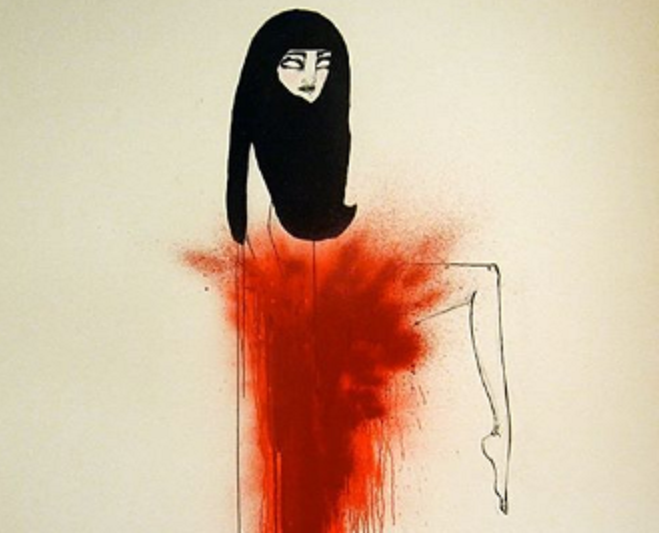
Image courtesy Pinterest
Last year, students at Calicut Medical College launched a contest to encourage each other to submit haikus about periods, after an intern threw out an open challenge to see if anyone would dare to walk around with an unwrapped packet of sanitary pads.
The outrage that this incident provoked seemed more than a little out of place, particularly in a medical college, but the poetry campaign eventually went viral on social media. Meanwhile, singer Sofia Ashraf’s new Tamil song ‘Period Paatu’, which released last month went mega viral.
These developments are just two instances in a larger trend of periods getting an unprecedented amount of attention in Indian popular culture. Phullu, a mainstream film about a sanitary pad-maker has just been released, and another film, Padman, is in the works.
A new comic illustrated by Delhi-based artist Pia Alize Hazarika explores menstrual hygiene. And this month, a travelling art show by Boondh, an organisation that works to make the menstrual cup affordable, is exhibiting several works of art based on the theme of menstruation.
Two years ago, Indian Americans had spoken up after being shut down for making their periods visible: Kiran Gandhi, the M.I.A. drummer, ran the London marathon without a tampon and got hell for it, while Instagram deleted a picture uploaded of Canadian poet Rupi Kaur lying on a bed with bloodstained pyjamas.
With the Indian government’s thoroughly misplaced move to raise taxes on pads while simultaneously making sindhoor tax-free, it’s clear that periods are still a reality that people would rather not acknowledge. And while its current moment in the cultural sun is heartening, the question remains whether these treatments are beginning to sound like a stuck record. Are they doing more than just repeating the homily that period taboos are ridiculous?
Take the CBFC’s decision to give Phullu an A rating, and Pahlaj Nihlani’s logic that people in non-metropolitan areas will be flabbergasted by a film about sanitary pads. Both have got a good amount of backlash, and articles have suggested that Nihlani is upholding the very taboos that the filmmaker was hoping to break through. But Phullu is also unimaginative in that the only way it chooses to dispel taboos is by having a man who is innocent (the people in the film keep repeating this) discover the hassle that menstruation can be for women.
Does the upcoming Twinkle Khanna-produced film Padman look like it’ll be any better? Based on the life story of ‘sanitary pad revolutionary’ Arunachalam Muruganatham, an entrepreneur from Tamil Nadu who created news when he invented a machine to produce sanitary pads in the late 1990s, it looks like this film will also focus heavily on the heroism of another enterprising male inventor who creates his own brand of sanitary pads.
Resources about menstruation are being actively created for and by women. Many focus not just on the broad strokes — the well-known fact that menstruating women aren’t allowed into some of our temples, for instance — but the more specific issues that plague women. Author Ariana Abadian-Heifetz has published a new comic book titled Spreading Your Wings which addresses puberty and menstrual hygiene, and is directed specifically at rural Indian women. Illustrated by the Delhi-based illustrator Pia Alize Hazarika, it contains information about pads and accessing iron tablets for anaemia, and will be translated into Hindi as well. And it manages to do it all without being patronising.
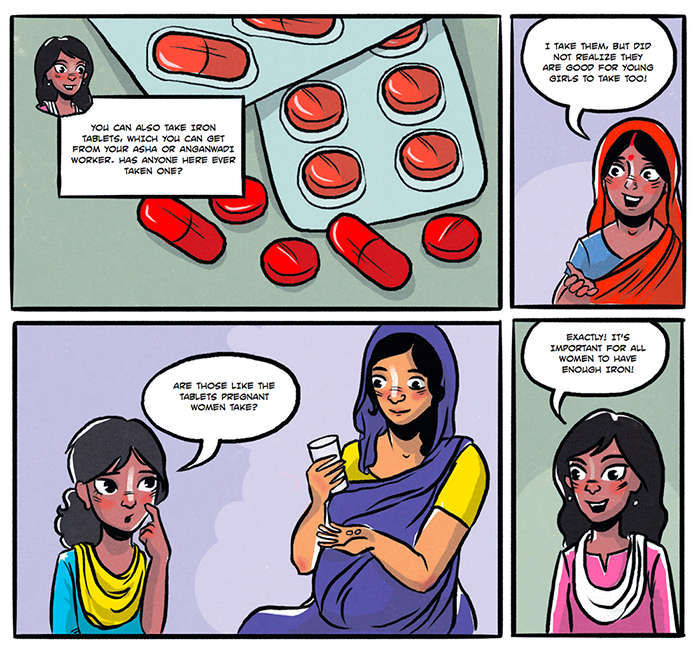
Image courtesy Spreading Your Wings.
In fact, Abadian-Heifetz raises a compelling question about the potential usefulness of art that focuses on menstruation, and the dangers of doing a Pahlaj Nihlani (who said in no uncertain terms that people from ‘the other India’ were obscured by a ‘purdah’ from basic biological facts like menstruation). She recalls, for instance, that when she discussed taboos with young women in self-help groups in Uttar Pradesh, they told her that that information was not what they needed to know. “Interestingly, when you would tell them certain myths are not true, their response was, ‘Of course, we know that’. They wanted to know how they could convey this to their parents and change the social thinking around it,” she said in one interview.
Another project that has been more effective because of its focus on specificities was conceived by Lyla FreeChild, a Jaipur-based artist working on gender and sexuality. She began contemplating creating art around the subject of sustainable menstrual cups in 2015. “When I came across the menstrual cup, and started using it in 2014, I was surprised that it had been around for so long and yet very few people I knew used it. I spoke to friends of mine, and some, even those who were sexually active, said they were reluctant about putting something inside their vaginas for so long. I wrote to SheCup [the producers of a sustainable menstruation cup in India] in December 2016 and created an installation in January-February 2017 that had 400 hanging menstrual cups, as well as explicit images of vulvas, breasts, and unshaved legs.” FreeChild told The Ladies Finger.

Artwork using period blood, by Zoe James. Image courtesy Boondh Facebook page
She vouches for the power of art in helping to shift debates around menstruation, because of the results she witnessed after her project on the cup: “When I used to just talk about cups, I didn’t actually see any friends shifting to it. After the installation, I stopped telling people they must shift, but almost 15 people I know have shifted since. I think art in any form has the power to propel a change, be it poetry, painting, installation, film or performances.”
A larger example of an exhibition that uses some of these mediums to talk about menstruation is ‘The Crimson Wave’, an art show that includes FreeChild’s work features, is using paintings, installations, photographs, and digital art to kickstart a dialogue about periods, taboos, and menopause. It was launched in Chennai and is also travelling to Bangalore, Delhi, and Mumbai this month.
The captivating pieces in this exhibition include the work of Priyanka Paul, an 18-year-old illustrator from Mumbai, whose prints reflect on the menstruation tax. It also showcases Bansri Thakkar’s book Silence of the Cramps that pokes fun at commercials that replace menstrual blood with blue liquid, and harks back to what the first period can feel like.
Some of the exhibit’s pieces tend to fall into the simpler ‘celebration of menstruation’ category: such as ‘Beauty in Blood’, a video project by Jen Lewis, a Michigan based conceptual artist. “It is clear the time is now to stand up and speak out on behalf of menstruation. It is a natural, messy but beautiful part of life,” Lewis is quoted as saying in a write-up about the exhibition (in possession of The Ladies Finger). This is one instance in which the insistence on acknowledging menstruation as necessarily beautiful comes off as a little contrived.
That’s not to say that art around menstruation has to have a practical value, but rather that the period dialogue doesn’t always have to include talk that portrays it as beautiful. It isn’t hard to gauge where that reaction comes from, given the constant vilification of periods. But the ‘celebration’ approach overlooks the fact that women have a range of experiences with menstruation. For some it is simply messy, intolerably painful (or not at all), or a logistically difficult few days in the month, not the inescapable essence of their womanhood.
This moment in Indian culture that is taking on a host of problems related to menstruation is a great comeback to the censorship of periods in public spaces, the internet and mass culture. It could still benefit from a focus on specific issues that plague women, which could include anything from recyclable cups to cramps or affordable sanitary projects. If it remains confined to just celebrating menstruation and its beauty as a rite of passage, it could end up becoming repetitive pretty fast.
The post Menstruation in Art is Bloody Good But Can We Move Past Just Celebrating it? appeared first on The Ladies Finger.
]]>