The post After Payal Tadvi’s Death Can We Allow Medical Education to Continue to Pretend to be Casteless? appeared first on The Ladies Finger.
]]>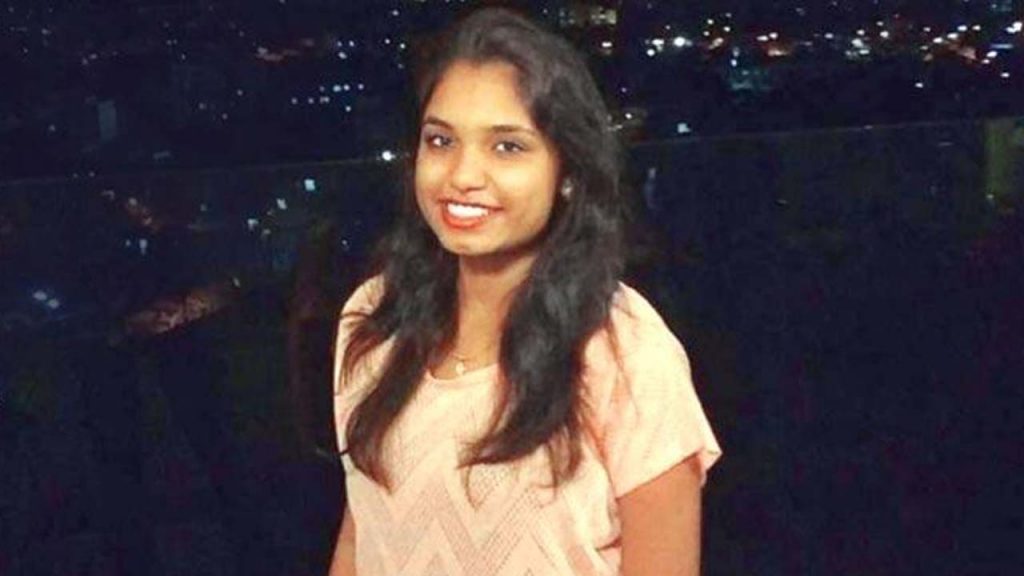
Payal Tadvi
By Nisha Susan
If you haven’t been living under a rock, you have heard women asking each other for the numbers of non-judgemental gynaecologists. Non-judgmental gynaecologists is what they ask for, not women gynaecologists. The medical system makes it amply clear that women doctors can be as emblematic of the horror-movie patriarchy that is the medical system. You have met them. Now imagine the three senior doctors who reportedly bullied and tortured Dr Payal Tadvi all the way to suicide in BYL Nair Hospital, Mumbai as your doctors. Imagine Drs Hema Ahuja, Antika Khandelwal and Bhakti Mehar who seem to be on the run after Tadvi’s death on May 22, treating you and operating on you. Imagine asking one of these doctors for their opinion and trusting that she is recommending your uterus be removed for your health. And not because she took a quick peek at your surname and decided that someone from your caste is not worth a thoughtful diagnosis or worth reproductive rights at all.
Tadvi’s bullies certainly seemed to have decided that the bright young doctor from an Adivasi family didn’t deserve her career, telling her that they wouldn’t let her finish her MD, do surgeries or even meet her mother when she was visiting. According to her family the bullying was severe enough for her husband and mother to lodge complaints, for her to be transferred out of the unit where she was deeply unhappy (only to be transferred back again). Severe enough that a few months ago, Tadvi’s family had approached the superintendent of police in Jalgaon where she had completed her MBBS to complain about the bullying that extended to the Whatsapp group the doctors were part of.
This is not the first death from casteism in a medical college, of course. As recently as January 2018 Dr M Mariraj in an Ahmedabad college attempted to commit suicide reporting a very similar pattern of casteist bullying from the establishment which asked him to serve tea and kept him out of surgeries. Insight Foundation’s three-part documentary Death of Merit was conceived after the tragic death of Balmukund Bharti, a final year student in All India Institute of Medical Sciences, New Delhi, who committed suicide in March 2010. The title is heavily ironic but ‘merit’ continues to be discussed with all seriousness year after year, after every death. Even today, there are folks responding on Dr Tadvi’s friend Dr Simin Khan’s Twitter timeline saying mindboggling things such as ‘they didn’t torture her because she was from an OFFICIALLY backward classes. But because she was well off economically and still used reservation quota to get things right… Find it crude but this is what happens when government’s schemes stretch too far.’ It doesn’t matter that no one knows whether Dr Tadvi did access reservation. It doesn’t matter because savarna guardians of merit and the quality of medical care are only inflamed by the presence of Bahujan students. The presence of savarna students who got in only by paying gigantic donations (after highly capital-intensive education and coaching classes and lives) never seems to worry those po-facedly saying there should be no reservation in medical college. If you ask medical students they will tell you about all that they need to do and what it costs (sometimes in actual rupees) to stay in the good books of professors, seniors, external examiners and ethics committees. Still, savarna doctors like to behave as if their place in medical school is, to use a medical term idiopathic — a condition that arises spontaneously or for which the cause is unknown.
While the Indian Medical Association has issued a deafening silence the Maharashtra Association of Resident Doctors (which has suspended the three doctors) seems to think the solution lies in an orientation programme for young doctors that will improve communication. Anyone who has seen screenshots of the Whatsapp chats of the absconding doctors will know that communication wasn’t their problem. Long before the professional education stage, schools should be talking about casteism. We should be talking about caste beyond a paragraph in history textbooks in that chapter about the Vedas. We should be talking about the complex, blatant and subtle ways in which caste affects our everyday behaviour, from our access to resources all the way to the transfer of pain across generations. Our schools and colleges need to be unsqueamish places where you have to confront the ridiculous word that is merit and kick it. And then when you get to medical college or law school you should have to attend further classes where you confront your flawed humanity or else you will be that south Bangalore Brahmin doctor who told my colleague who had cysts and ulcers that her chronic stomach pain was because she ate mutton curry the previous evening.
I once knew a kind and brilliant young medical student. He had sweet endearments for his girlfriend, was crushed like an eggshell when she broke up with him, worked hard to understand how public health can be improved. When we spoke about the first few weeks of college and ‘ragging’ he told me a horrifying story that ended with all the first years having to jump into a pit of pee. What was doubly horrifying was his beatific smile as he told me that he thought it had been a good bonding experience. I don’t know what he feels about it now but when my skin still crawls at the memory. Ragging is only the highlights of the full-on dehumanised medical college experience. Modern medicine and medical education around the world is highly alienating, and needs a permanent mirror in its face to show its power-hungry face. But in India we have a perfect storm of gender, caste and class that produces the majority of our doctors. On the other hand if the Twitter account that I found did indeed belong to Dr Payal Tadvi this was a young woman with a deep interest in ecology, in public health and the world much, much wider than her. Mostly though we have Savarna doctors who are squeamish about touching patients, too used to thinking well of themselves to consider speaking to patients, too used to discounting the pain of others to inconvenience themselves in any way.
In the last decade women around the world including in India have begun to talk about what it means to be a woman patient. Pain, heart attacks, dosage, contraception, conception — feminist critiques of medicine helps us understand that the male body is not neutral and the body is not just a body, it lives in the world as a social being. But while we talk, medical colleges continue to function as grinding mills. Untroubled by any political critiques they continue to work towards producing people who will be able to monetise every 15 minutes they are awake. Teenagers who have spent their childhood in tuitions and coaching classes get in and leave as adults who still don’t know how to talk or listen. Their education doesn’t educate them. And in the five years of their sentence they turn on each other and the most vulnerable among them. And then when they graduate we have a situation in which human beings at their most vulnerable having to seek treatment from people whose education has taught them to show no kindness, understand no weakness. And if you are still worried about merit let me give you a tip. When the student parking spaces of medical colleges accommodate SUVs that’s when patients should worry about the future of medicine.
Co-published with Firstpost.com
The post After Payal Tadvi’s Death Can We Allow Medical Education to Continue to Pretend to be Casteless? appeared first on The Ladies Finger.
]]>The post Jokha Alharthi’s Man Booker Win Reminds Us of Oman’s Recent Slave-owning Past appeared first on The Ladies Finger.
]]>
My schoolmates and I read the news that Jokha Alharthi had won the Man Booker International with a thrill. At last we could read about our childhood home Oman in a novel, we texted each other yesterday. We left school in Muscat a couple years before the Internet so all we knew about Oman when we lived there was from the heavily sanitised newspapers, a rare book or two by foreign writers, the rumour mills and of course Oman’s own self-fashioning propaganda machinery.
My father likes to tell this argument he overheard between two patients in his waiting room. The Omani patient apparently had been going on and on to the Egyptian in the next chair about the greatness of his culture. He was spouting the version we all heard every year on July 23. Renaissance Day is the anniversary of the day the current Sultan began his rule after a coup d’etat against his father and as we were all reminded the ‘beginning of a glorious era to build a better life for citizens’. The Egyptian had been biting his tongue as immigrants often do. Finally exasperated, he snapped, “My bathroom is older than your culture, okay?” I felt optimistic when I read that Alharthi was a resident Omani, teaching in Sultan Qaboos University, minimising the chances of it being the sentimental mediocrity Indian readers in English are subjected to from NRI writers. But I did wonder whether it would be heavily caught up in the nationalism project.
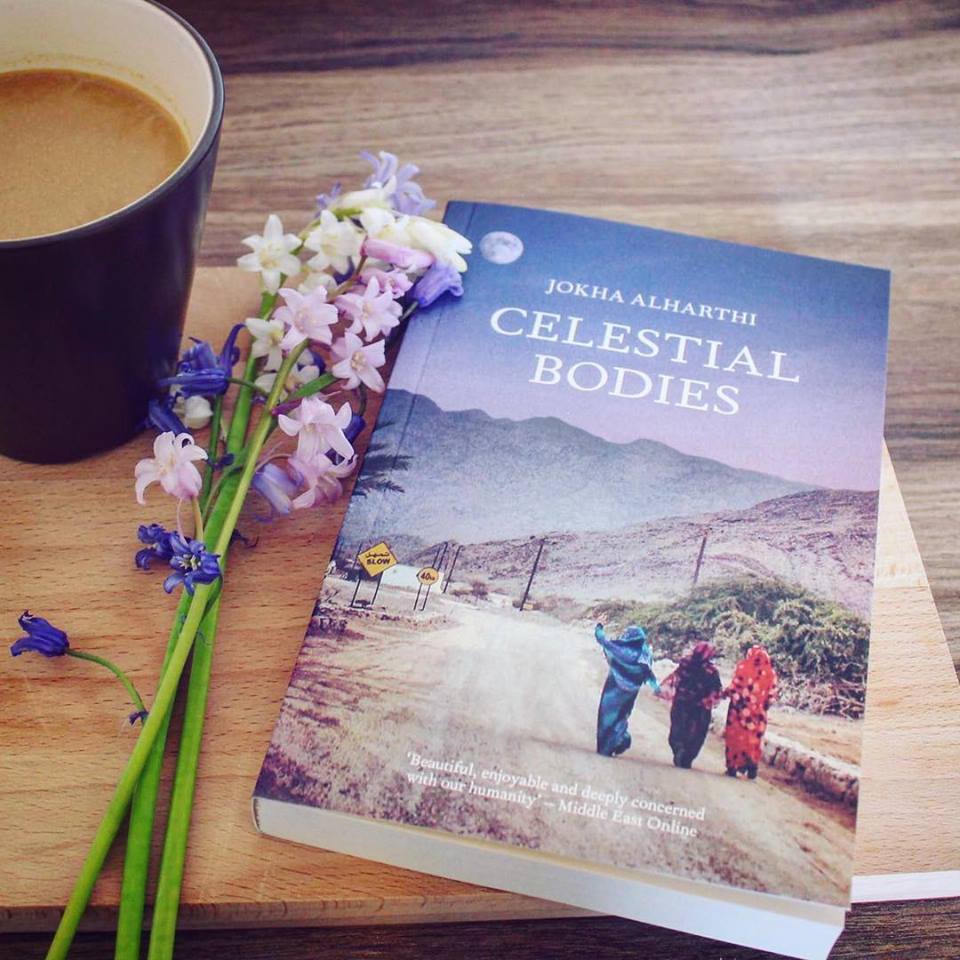
Oh how wrong I was. Celestial Bodies is the first author from the Gulf to win the Man Booker International Prize. Alharthi is the first Omani author ever to have her novel translated from Arabic into English. All those firsts apart, it is a sophisticated novel drawing from an ocean-deep literary tradition. Celestial Bodies is full of the classical poetry Alharthi has a Ph.D in. It has barely two paragraphs of explanations written for the dying-to-be bewildered Western reader. Which is not to say that the book doesn’t have any inadvertent gimmes for my schoolfriends and me. Here are a few shout-outs for the benefit those of us who lived in Oman in the period of this novel. Forgive us, Ms Alharthi, as you write another accomplished novel. Nido milk powder tins. Teenage boys being followed in fancy cars by scary older boys in Qurm. Feeling like Al Khuwair is only for people with cars. Egyptian schoolteachers. Indian women working in the hospitals (Hi!). Omani halva that for some reason the excellent translator Marilyn Booth calls jelly-sweets. Shouting ‘goooooooooaaaaaal’ at the TV during football matches. Muttrah souq. Tea with saffron. Hearing about friend’s friend who died in the flashfloods. Boys with white kummahs on their heads, the kind that my mother embroidered occasionally for a hefty fee. Listening to the oud. Hearing about the friend’s friend who was raped and finding nothing in the papers. Rejecting dried dates for fresh dates. Suntop juice.
Having gotten that out of the way here is to the main business. Celestial Bodies tells us about the massive changes that Oman saw between the early 80s and the early noughts and how the arrival of oil money affected people across class and ethnicity. It talks about love, sex, ambition, pretension and grief. With near-perfect control she takes us from young Mayya at her sewing machine in a tiny town to Abdallah who falls in love with her to Abdallah in the future looking back at their daughter London when she splits from her abusive boyfriend to Mayya’s mother Salima and her childhood as a dependent niece in the house of the rich and cruel relative to the life of Ankabuta, mother of the slave Zarifa who brought up Abdallah, who also lived in the house of the cruel relative to the suffering of the younger brother of Najiya, the business powerhouse Bedouin that Mayya’s father falls in love with. I did see a whiny short review in The Guardian, which said, that it’s difficult to “unravel all the bewildering inter-relationships.” I disagree. Alharthi makes the unraveling very satisfying.
It’s only in the last few years that I have learnt about Oman’s slave-owning past. I certainly heard nothing of it while living there. Knowing about it didn’t quite prepare me to read about it in this book. Al-Harthi’s approach is one of neither valorizing the slaves nor burnishing the slave-owners. She just takes you along when she flashes from Al-Awafi, the town where Abdallah and Mayya grew up to Kenya where Ankabuta’s father was kidnapped or into the slaver ship in which Zarifa’s husband Habib was stolen from Balochistan. I imagine that few privileged writers can manage as Alharthi has to resist a declension narrative where somehow the slave-owning past was beauteous and alas now the sheikh has no one to press his once-mighty ankles. She resists torture porn and lightly embraces the banality of evil.
Here is an early para when a central character Abdallah remembering his father Sulayman and his daughter London. “He went on shouting, in one of these bouts of raving that took over his mind for most of the two years before his death. Boy! Boy! Tie Sanjar up, tie him to the column on the eat side of the courtyard, out there, out in front of the house. Anyone who gives that slave water or shade has to answer to me. I knelt down beside him. Father, the government freed the slaves a long time ago and then Sanjar went to Kuwait. (Every summer London would say, Papa, let’s visit Kuwait. But Mayya always rejected the idea: So we’re going to get away from this heat by escaping to somewhere hotter?)”
London, Sulayman’s granddaughter, is not preoccupied by slaves and wants a pediatrics degree from Canada, a BMW and true love. But her Muscat contains the children and grandchildren of former slaves making their way in the world, remembering and forgetting their ancestors kidnapped from Kenya and Zanzibar and Baluchistan. It contains the children and grandchildren of those who mounted armed rebellions against the Sultan and the British. Alharthi’s whip-speed disturbs you in a way that an epic sprawl may not be able to. In a non-pedantic, wholly interesting way Celestial Bodies shows you also what is remembered and what is forgotten in a ‘new’ nation.
Co-published with Firstpost.com
The post Jokha Alharthi’s Man Booker Win Reminds Us of Oman’s Recent Slave-owning Past appeared first on The Ladies Finger.
]]>The post Let Us Admit the Sins of Atishi Marlena appeared first on The Ladies Finger.
]]>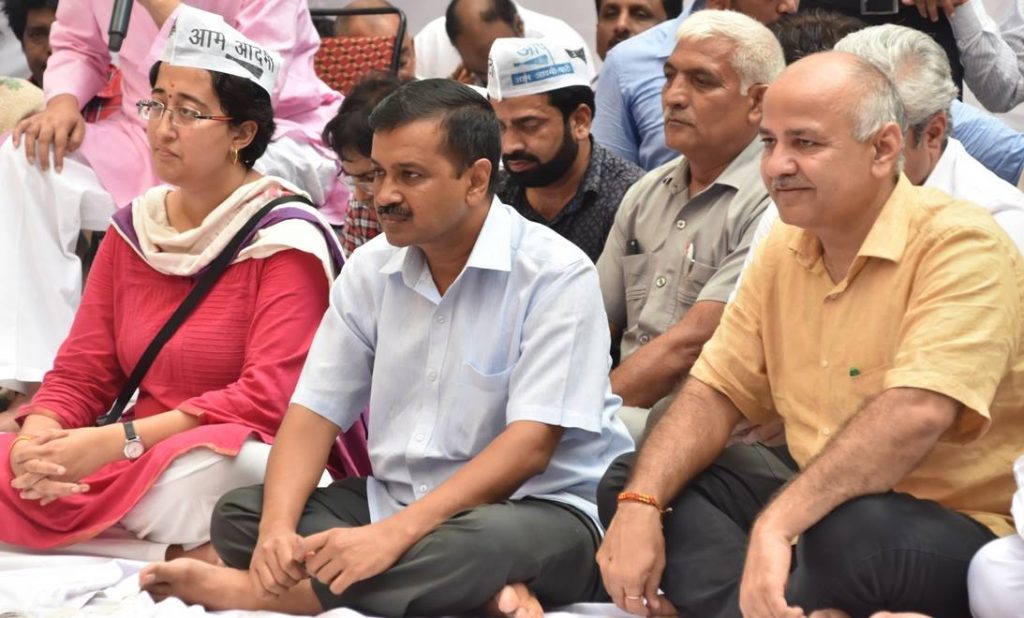
My friends and I like to retell a story about a well-known Bangalore feminist who passed away a few years ago. Two stories actually. One that when her husband brought home, over her objections, a friend with a reputation for being abusive to his wife, she left the house and sat on the footpath and told everyone who asked her why she was sitting there. The second one was when she got into a protracted argument with an auto driver who wouldn’t return her change. The auto-driver eventually snapped ‘soole’ at her. That’s whore in Kannada. She is supposed to have said, “naan soole irrbohdu aadre chilre vaapis kodu.” (I may be a whore but give me my change.) It is a line I have had many occasions to remember during this election season. Long before a comically villainous pamphlet against AAP’s East Delhi candidate Atishi started making the rounds this week.
When I attended a non-partisan meeting in December 2018 to promote the number of women candidates, politicians across board agreed on the deep misogyny and violence that is wreaked upon them as candidates and as working politicians. Back in December there was some hope that the parties would field more women that the pathetic handful they usually do. Months later, we see that only the Biju Janata Dal, Trinamool Congress and Naam Tamilar Katchi have made an true, admirable commitment to correcting the imbalance. Here are some numbers. Of the 8048 candidates running for elections we have 711 women. Women candidates are 8.8% this time marking a teeny 1.2% increase compared to 2014. And what fun it is to run for elections if you are a woman.
Political parties in India almost never give women the chance to rise through the ranks. The few women who do end up getting tickets are either well-connected or celebrities. The latter group of women politicians face a mandatory set of childish remarks about their clothing and what it implies. One dude says, “Smriti Irani sits beside Gadkari and talks about changing the Constitution. Let me tell you a thing about Smriti Irani. She wears a big bindi on her forehead and someone told me that when a woman changes her husbands frequently, the size of her bindi keeps growing.” What does this mean? One other fellow calls Priyanka Gandhi a skirt-wearing bai. What does this mean? Or read any line from the pamphlet about Atishi and ask yourself, does it really mean anything. The words in the end mean nothing, I would argue. From Urmila Matondkar’s rival calling her a bholi bhali ladki to someone else saying Jaya Pradha would make nights rangeen in Rampur, all these sentences convey is a blinding smirk and a cloud of befuddling contempt. The male politicians would like this cloud to make their women rivals and their voters feel small and useless. Most of all they would like women to believe that the idea of a woman running for elections, a woman winning, a woman proposing policy and change are all figments of our juvenile imagination, like wanting endless ice-cream.
To impose their preferred reality on women, male politicians have to ask the pointless time-wasting questions they specialise in. And when a candidate does not fit the type like Atishi or Mayawati or Mamata Banerjee, then their questions and allegations become even stranger. It would have been a simple matter for Gautam Gambhir, the BJP candidate and his party to simply deny and renounce the pamphlet yesterday for its ridiculous contents. Instead, Gambhir has sent Atishi a defamation notice while his fellow party members went on television last evening to say that they have seen Atishi eat beef and they would like to know where her husband is. Instead Gambhir tweeted to AAP’s Arvind Kejriwal and Atishi last evening: “I declare that if it’s proven that I did it, I will withdraw my candidature right now. If not, will u quit politics?” Calm down, sir, you are not in a 90s Tamil campus movie to be issuing challenges with your forefinger sticking out.
The AAP, whose Delhi school reforms is their one justly celebrated success, a success they credit to Atishi, have played their part in trying to make her fit only one kind of reality. Her surname Marlena has been ‘disappeared’ in case people think she is Christian. She appears with a teeka in case people think she isn’t an ‘upper’ caste Hindu. Why not provide her with a janeudari husband and a bowl of kachumber while they are at it, to fully erase who she is and the brilliant things she can do. All our male politicians defend themselves by saying they are pandering to the voters when all they are doing is pandering to themselves. The majority of our politicians would like to pretend that the voters do not include Muslims, do not include Christians, do not include Dalits and do not include women. And some of us who belong to one or more these categories are supposed to feel the sting of their contempt and quietly go home. Imagine a beef-eating, ‘lower’ caste woman daring to stand for elections or daring to want anything at all. Hence the establishment aka upper caste Hindu gents would like a reality in which it is comical for Hema Malini or Urmila Matondkar or Smriti Irani to enter politics and fully play along in the dumb charades of election campaigning but serious for Kamal Hasan or Rajinikanth to endlessly stroke their chins about politics. Hence Modi is serious but Mayawati is haha so funny. This is a version of ‘reality’ we must reject all day long, everyday until these men go home. Otherwise we will continue to have a life in which ‘Atishi taught in a primary school in a small village in Andhra Pradesh’ is part of a smear campaign. See then the power of a Mayawati asserting her reality by saying at a rally, “Chamari hoon, kunwari hoon, tumhari hoon.” I am a Chamar. I am single. I am yours.
Did Gautam Gambhir and the BJP circulate that pamphlet? Who knows. It really is a very silly document that looks like it was stitched together with all the fever dreams of WhatsApp. Do the assertions of the document closely skew to the misogyny of the BJP and many of our political parties? Oh, for sure. Should should we be feeling sorry for Atishi or Divya Spandana if a pamphlet about them includes magnificent sentences such as, ‘she is a prostitute. Think for once that if she wins you will have to go to a prostitute for help or some work.’ Are we supposed to cry and feel bad and wonder how she will ‘ever get over this’? Please.
If you step back from the heaving male bosoms of our politicians this ‘accusation’ really cannot treated as something that will swerve women from their work or their political destiny. Our voters include skirt-wearing bais, women married to Christians from AP, Christians from AP, bholi bhali ladkis, saas and bahus, beef-eaters, sex workers, unmarried women, women who are thankful that their husbands are far away in Delhi with political ambitions and women who can make nights rangeen in Rampur. We all vote. We all might stand for elections. And until then let us say aloud: I may be a whore but give me my political change.
Co-published with Firstpost.
The post Let Us Admit the Sins of Atishi Marlena appeared first on The Ladies Finger.
]]>The post The Unpleasant Meanings of Sri Lanka’s Hijab Ban appeared first on The Ladies Finger.
]]>
Woman on Beach at Sunset – Mt. Lavinia – Colombo – Sri Lanka by Adam Jones via Flicker CC by 2.0
Back in 2009, then French President Nicolas Sarkozy said hijabs were a sign of women’s debasement and began the process of banning them. In the heat of that particular episode of the global culture war, I interviewed an assortment of hijab-wearing women from across India. A number of young women I spoke to despised the hijab and couldn’t wait for a day when they could stop wearing it. But several other women I spoke to were the first in their generation to wear hijabs. Whichever group they belonged to, every single woman I spoke to ascribed different meanings for the hijab — from modesty to privacy to obedience to the Quran to a political identity formed after the Gujarat riots all the way to an electric enjoyment of the mystery of being the girl with the beautiful eyes. Some of them covered their faces, some covered their hair and some wore them when far from home and some only in the last half km as they approached home. One of them told me, “Sometimes even close friends ask about ‘pressure’. I tell them: think of how joyfully you ask your mother to put a teeka on your forehead. You’ve to believe that I have a mind.”
This week the Sri Lankan government banned ‘face coverings’ as a response to the killing of 250 people in coordinated attacks on Easter Sunday. According to the government’s statement, ‘the ban is to ensure national security … No one should obscure their faces to make identification difficult.’ Hijabs/niqabs are not named but it’s clear that is what is meant since the 7 suicide bombers are now linked to a local militant Islamist group with possible foreign ties.
The hijab means different things everywhere. Two weeks ago an Iranian woman who protested the hijab by unveiling herself in public has been sentenced to a year in jail. Muslim teenagers in New Zealand have been quoted saying they felt happiness in seeing Sudanese political activist Alaa Salah standing on a car in her headscarf, chanting and looking ready to rule the world. In Sri Lanka that has seen decades of war, reportedly Muslim women are already long accustomed to removing their niqabs at security checkpoints.
And now in the week since Easter, the meaning of the hijab is changing again in Sri Lanka where ten percent of the population are Muslims. The Sri Lanka Muslim council have called the new hijab ruling “the stupidest thing to do.” Hilmy Ahmed, vice-president of the Sri Lanka Muslim Council is quoted as saying, “Three days ago we [the Muslim community] took a voluntary decision regarding this. The All Ceylon Jamiyyathul Ulema told all Muslim women not to wear face veils for security reasons. If they wanted to wear a veil, then they were told not to come out.” Muslim leaders have been at pains to detail how they had alerted the authorities to the dangers posed by the organisation behind the bombings, National Towheeth Jama’ath and its leader Zaharan Hashim several times, only in vain.
What are we missing in this picture? What Sri Lankan Muslim women feel about this situation. As Tehani Ariyaratne, a women’s rights activist told Al Jazeera, “Any ban on the niqab without consultation with those who would be directly affected by it, is nothing but a reactionary response by the state, designed to distract from its woeful lack of accountability for the events that have taken place over the last week. Muslim women and Muslim women’s rights groups and activists have not been consulted in the process of putting this ban in place.” Sri Lankan gender researcher Megara Tegal draws attention to the organisation that was actually consulted: “The All Ceylon Jamiyyathul Ulama (ACJU), one of many Muslim organisations in Sri Lanka, has no women in its leadership. In the past, the ACJU had released a fatwa declaring that Muslim women should conceal their faces in public. The ACJU has also stood against Muslim women who have demanded reforms in Muslim personal law.”
This is the kind of structural oppression that Egyptian writer and activist Mona Eltahawy has protested for decades. In the past she has supported hijab bans such as the one in France. But more recently she has condemned the racist agenda of such bans and said in an interview, “I wish us Muslim women didn’t have to constantly use our body to prove that we’re Muslim. I wish this wasn’t the only way to show our opposition to Islamophobia or xenophobia. The body of Muslim women is like a blackboard where everyone leaves their message. But what happens to the messages we want to write? I don’t want my body to equate a hijab.”
Even without the chin-tipping of the Sri Lankan government, the hijab wearing woman in Sri Lanka is likely to become the focus of the Islamophobia in her village and in the gaze of the world. What is the meaning of the hijab in Sri Lanka in 2019? To quote Eltahawy, “unless you’re a Muslim woman, shut the f**k up and listen to Muslim women.’ The Sri Lankan government is leaving its own message on the body of Muslim women by linking the hijab to national security.
What does the hijab say about national security? It would make more sense to ban backpacks, the kind the bombers used. It was the backpack that raised the suspicion of Ramesh Raju who stopped the bomber from entering the Zion church in Batticaloa, saved many lives and lost his own.
Co-published with Firstpost.com
The post The Unpleasant Meanings of Sri Lanka’s Hijab Ban appeared first on The Ladies Finger.
]]>The post An Artistic Appreciation of the Narendra Modi-Akshay Kumar Wife Joke Pas De Deux appeared first on The Ladies Finger.
]]>
Shy came for cameraperson
If you have watched the televised interview of Prime Minister Narendra Modi by movie star Akshay Kumar you likely already have your favourite moments. If you asked me to pick one it would be the moment in which Modi decided to demonstrate that national artefact – Man Tells Wife Joke. In the matter of form Modi has displayed great exactness in performing this traditional art. Let us examine it closely.
#WATCH PM Narendra Modi speaks on Akshay Kumar & Twinkle Khanna pic.twitter.com/r0Y2fCjaK0
— ANI (@ANI) April 24, 2019
The segment begins with Modi informing Kumar that he checks out both his and wife Twinkle Khanna’s Twitter timeline, a detail I am not going to waste your time or mine exclaiming over. Modi says, “aapka bhi Twitter dekhta hoon aur Twinkle Khanna ji ka bhi Twitter dekhta hoon.” This opening sentence is like the plié in ballet or aramandi in bharatanatyam. At this point, Akshay Kumar laughs without making eye contact with Modi having a strong awareness of shitz coming.
And indeed Modi makes the grand jete. He says, “aur kabhi kabhi mujhe lagta hai ki woh jo mere par gussa nikalti hai Twitter pe, toh uske kaaran aapke parivarik jeevan pe bahut shaanti rehti hogi.” If the PM said to you, “sometimes it seems to me that her venting her rage on me on Twitter must be bringing a lot of peace to your domestic life,” I am not sure what you would say. It’s not clear to me here whether Modi means Khanna is angry because of her husband’s association with Modi. Or whether he means Khanna being a woman has rage that she needs to vent and this rage is luckily for her husband being expended harmlessly on Twitter via the supposedly harmless activity of critiquing the PM. (Unless of course your post catches the eye of the officer-in-charge at Imphal police station ainvayi surfing the net. In which case you might spend four and a half months in jail like Kishorechandra Wangkhem). The form that Modi is performing here is the Wife Joke so I am inclined to go with the latter interpretation – that pata nahi Twinkle ji ko gussa kyo aata hai but I am here for you bro. A standard requirement of this form is the invoking of the massive and permanent anger of the wife aka Rudra Bhairavi. A second requirement is the invocation of the bechara husband who tries but fails at even comprehending the wife’s anger. He is like a child with a bathroom mug standing on the beach just staring at an approaching tsunami wave.
Where Modi makes a landmark reinterpretation of the form is also at this moment. The preferred variation on the Wife Joke is to make a joke about wives in general or a joke about the wife of some man you both know, hehe. Modi’s wife is distant from him geographically if not emotionally or legally. On this occasion Modi makes the daring artistic choice of going from Man Bonding with Other Man Via Wife Joke to Man Bonding with Other Man Via Joke About Other Man’s Wife.
Akshay Kumar makes the intellectual decision in this adagio to respond with wheezy laughter. At this point we see the two artistes only from a great distance and from behind a bush. My guess is that the millennial cameraperson felt wholly embarrassed on behalf of uncles, and vowed to himself that when he is old that is 32 years old, he will never tell such sad and bad ones. However I would advise the young cameraperson to nevertheless take note. And the prime minister at this point returns to form that only rank amateurs will fail to recognise.
One. The elaborate repetition of the joke in the hope that it will land better this time since the other person is not convulsed with laughter the first time. Modi says, “unka poora gussa mere par nikal jaata hoga. Isliye aapko bada aaram rehta, bada sukoon milta hoga.” All her rage must be expended on me, he says. Confirming our theory that Modi is referring to Khanna as a vessel of feminine and totes random anger. He goes on to tell Kumar, making as little eye contact as his interviewer, that hence he must be quite relaxed and at peace because his wife uses Modi as a virtual stressball/punching bag. Then like Dipa Karmakar going for the Produnova Modi repeats it a third time. “Toh mein aapke liye is prakaar se kaam aaya hoon. Khaas karke Twinkle ji ke liye.” I have been helpful to you this way, he says. And particularly helpful to Twinkleji.
Two. At counterpoint Modi performs another classical sequence, laughing hard at his own joke. This is essential and cannot be set aside in some perverse pursuit of modernity. Uncles must laugh at their jokes and indicate that they are barely able to breathe because of the hilarity both of the moment and what will soon be a favourite memory of ‘that time I cracked a joke’.
Next, Modi pays tribute to Milan Kundera’s quote, “the struggle of man against power is the struggle of memory against forgetting,” and pivots at inhuman speed into an uncategorizeable anecdote about Twinkle Khanna’s nana and something about buttermilk. “Aur shaayad Twinkle ji ko pata nahin hoga but unke nana unse mein mila tha,” he says. With this my favourite sequence more or less ends.
You might linger on to watch Kumar rub his eyes and cradle his jaw and other such familiar motions of the NRI visiting his wealthy uncle who is about to show him a fantastic video that he just now only got on Whatsapp. But I was satisfied.
Co-published with Firstpost.com
The post An Artistic Appreciation of the Narendra Modi-Akshay Kumar Wife Joke Pas De Deux appeared first on The Ladies Finger.
]]>The post Nutty Conspiracy Theories about Porn Jihad Have One Truth at the Heart of it appeared first on The Ladies Finger.
]]>
On April 11 the BJP’s official Twitter account reported party president Amit Shah as saying, “We will ensure implementation of NRC in the entire country. We will remove every single infiltrator from the country, except Buddha [sic], Hindus and Sikhs.” This is an election which is not just gloves off about communal agenda, it’s also an election in which you are likely to forget that there have ever been gloves. While the BJP is still using the tiniest of figleaves like infiltration and the legitimacy of citizenship to evoke the promise of a Hindu nation, some right-leaning citizens have no patience for such tomfoolery.
On April 8, Twitter user Poornima Nayak Deb who on her timeline generally displays an undiluted dislike of Christians and Muslims tweeted a long thread that began, “Though not a new thing & has always been a part of “Sex Jihad”, “Porn Jihad” is becoming a trend among organized attacks on Hindu sentiments. But there’s also a very alarming sinister plan beyond that. There’s a psychological warfare hidden in this.” Deb’s argument was that a Muslim conspiracy is targeting Hindu women through amateur porn. She shared screenshots of the videos, which she felt were typical of the scheme. They had titles such as ‘College Hindu Girl Sex with Muslim Boyfriend’ and ‘Desi Hindu Girl Having Rough Sex with Her BF Aamir’
Deb says some of these videos are recorded without the consent of the woman and the others are fake in some way. She says, “Either way, a young girl new to her hormonal boosts & women in desperate conditions may view them as real inter-faith “romance”. Young women and ‘unsatisfied’ women are the two vulnerable populations in Deb’s scheme of things and she was ready to go to ‘patal lok’ to save them. What is the danger that Deb wanted to warn the world about? She was convinced that young Hindu girls and Muslim men were sexually attracted towards their sworn enemy through these videos. Deb wanted the police to get involved to take these videos offline.
Much like Regina’s response in Mean Girls when Gretchen tried to make ‘fetch’ happen, the popular response to Deb was ‘stop trying’. One lot of hecklers stopped with the low-hanging fruit of mocking her for watching porn and others asking her what VPN she was using to access these sites. (A smaller subplot emerged when folks began sharing screenshots indicating that a desi porn account on Twitter had changed its handle to chowkidar). For most part the ‘discussion’ became the regular ancestors/ricebags/conversion/invaders bingo game. You didn’t have to be there.
While Deb started her thread by acknowledging the truth of the Sexy Other she and those who agree with the premise of Porn Jihad mostly wallow in the fear of the Sexy Other. So the thread devolves rapidly from expressing anxiety that Hindu women would be tempted by what they see online to get involved with Muslim men all the way down to a full-fledged apocalypse in which she Deb knows, knows for sure, that so many Hindu girls have committed suicide because of their Muslim boyfriends making revenge porn. To those who point out that there are videos tagged with Muslim woman-Hindu men combo she is dismissive, convinced that the scale does not compare and more importantly Muslim women are not committing suicide from fear of such treatment from Hindu men. And soon Deb is stuck in a vicious loop of saying over and over again to all her detractors that her desire is to save only Hindu women. So if you are some sort of random person concerned about issues of consent in general, please, takhliya.
Save Hindu women from what though? Early on in the thread, one would imagine Deb wants to save them from the danger of good sex or even just sexual yearning based on what they might see online. Then there is a smaller thread that asserts, needless to say without any evidence, that the Muslims are using revenge porn to make money. And Deb makes some throwaway mention of organized mafia. In a while Deb’s thread collapses into a sort of familiar glutinous upma of loss from whence even Hinduism, not just our Hindu sisters, cannot be rescued.
But in these joyless and sexless times we should be grateful to Deb for what she says early on — the universal truth that the Other is Hot. And sometimes Too Hot. Sometimes it is merely a mild erotic frisson of the sort that older Mills & Boon romances banked on for their white readership. The dark Spaniard hero never had any political charge. The Arab hero could always occasionally brutally kidnap the English rose but some stuff remains taboo. Contemporary romance publishers still keep African-American protagonists walled away, as this recent Guardian report reveals. In our highly polarised desi context, it is both universal truth and universal fear that the Muslim is hot. For a sizzling, non-toxic pop culture representation of this truth/fear I will refer you (over and over again, sisters) to Shah Rukh Khan’s Muharram scene in Raees. When I watched the scene I could not help remembering a glittering public event in Delhi years ago at which I saw SRK respond to the Sexy Muslim subtext. Someone asked about his six-pack, he flashed his abs and then said to the person who asked the question. “This interview can continue if you like. I can show you what a Muslim looks like on the inside.” O Eros, O Thanatos.
Deb lives deep inside troll land and often asks those tiresome ‘daring’ questions like who was Jesus’ daddy. But nevertheless we should be grateful to her for raising this supposedly frivolous topic smack in the middle of our oh-so-solemn election season. Amit Shah may hope to keep his friends close by promising to drive out all ‘infiltrators’ but Deb knows that even Shah can’t help with the rawest of fears, that the bad minorities may infiltrate (harder, harder, faster, faster) our sexual imaginations and make the majority look rather unfuckable.
Co-published with Firstpost.com
The post Nutty Conspiracy Theories about Porn Jihad Have One Truth at the Heart of it appeared first on The Ladies Finger.
]]>The post Do You Have The Life-Changing Magic of Sitting Properly? appeared first on The Ladies Finger.
]]>
A thirty-something woman once told me that the single most shameful memory of her teens was what happened when her father walked into a room where she was sitting on the floor with her legs wide apart. “He just shouted at me to close my legs. I was alone. I was 13 years old. I was wearing pants. Somehow the fact that I was wearing pants made it worse, more shameful. Because it wasn’t like I was sitting weirdly and showing my legs or accidentally flashing my underwear. In that moment, my father made me strongly aware that I had a vagina. It was as if my father had walked in on me naked and holding a board saying: ready for sex.”
I’ve been thinking about her face as she told that story ever since the Lo Beth Gayi Teekh Se discussion took over Pakistani Twitter and Pakistani feminist circles.
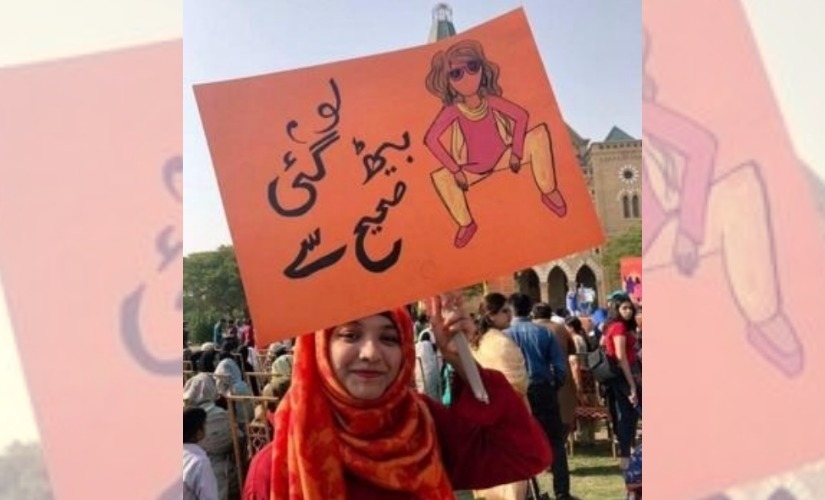
In early March, a pair of young Karachi feminists, Rumisa Lakhani and Rashida Shabbir Hussain, created a poster with the Lo Beth Gayi Teekh Se (Look at me sitting so properly) slogan juxtaposed with a cartoon of a girl holding her thighs apart like a wrestler. This is the poster they carried to the Aurat March on Women’s Day in their city, a march in which over 7000 women participated. Lakhani and Hussain’s was not the only ‘edgy’ poster but it seems to have attracted the most attention.
In the weeks that followed the poster best represented the divisive elements in the big-tent Aurat march. Some feminists found it frivolous and other feminists found the first lot of feminists falling into the trap of patriarchy by gate-keeping what is a ‘real’ feminist issue. And as always when there is an internal discussion of what isn’t feminist enough, men are champing at the bit to offer their own Zomato reviews. When the renowned feminist poet Kishwar Naheed criticised the Lo Beth Gayi Teekh Se poster among others, men of all political stripes heard the whistle go off. A casual look at Pakistani twitter and television will give you everything from the old sport of men deciding what is real feminism. From men who think that ‘my body, my choice’ means it should be men’s choice to rape women to men who are now so regretfully withdrawing their sincere support of the Aurat March and feminism now that they have seen how ‘real’ issues have been sidelined.
Never mind that many of these armchair referees have never shown any real support for ‘real’ issues such as domestic violence to rape. One of my favourite tweets from the arbiters of Realness went thus. “If they are getting rape threats after a march that was supposed to educate men better, it means the message didn’t get across. May be if their messages concentrated on educating the masses than degrading all men regardless, they might’ve gotten better results.” But let’s come back to Lakhani and Hussain’s poster. Let us sit properly and discuss that one.
Several folks including the BBC have referred to the poster as the ‘womanspreading’ one. This is a full debate in itself. How much space should and can women take up in public? Men are notorious for taking up more than their share of space in public earning them the neologism ‘manspreading’ and even transport department campaigns against the behaviour. Studies have existed for decades to indicate that if a man and a woman are walking towards each other on a pavement, there are very few occasions when the man is the one who gets out of the way. In the last few years several non-scientific experiments have shown that when individual women experimented with deliberately not moving out of the way it ended in collision. British academic Charlotte Riley gave her experiment the best name – Patriarchy Chicken – after the game in which two drivers drive towards each other. One must swerve away or both could die. Obviously the one who doesn’t swerve is the winner. And the one who swerves is a chicken or cowardly. Obviously.
Riley writes about her experience, “Some men don’t walk straight into you, of course. Some men find their brains overridden by the unfamiliar experience of a woman refusing to give way… a man was so confused… that he stopped dead in front of me, holding eye contact, and flapped his mouth like a fish.”
While these discussions have turned on the axis of space, the reasons for the firestorm in Karachi were somewhat different. To sit ‘improperly’ is to be sexually provocative. To have parted legs does not prompt concern from parents and the mohalla any perceived vulnerability. They don’t say, “careful, beta, you may trip. You may trip on a penis.” The admonition does not come with softness or concern. As in the case of my friend, what you usually get if you space out and don’t ‘sit properly’ is a sharp rebuke or a long rant. If you have grown up with the ‘sit properly’ shout, as an adult it often needs a deliberate system override (or more shouting) for you to part your legs — to wax your thighs, to get a gynaec’s examination, to get a transvaginal ultrasound, to ride pillion safely, to have penetrative sex, to climb over a wall or to play sports.
Parting your legs is invested with the power of summoning immediate sex like a genie from a bottle, even if you are, as my friend was, a 13-year-old sitting alone in her room. On the other hand, sitting properly can also give you mythic powers. In 2014, a Canadian judge presiding over a sexual assault trial asked the victim, “why couldn’t you just keep your knees together?” (He had to leave the bench.) In 2018, an American judge asked a woman if she had tried to prevent assault by keeping her legs together. (He has been suspended.) Your assaulter may be one or many, may be bigger than you, may be armed, may threaten you or your family but girl, if you sit properly then you can’t be raped. Always remember.
It is right that feminists continue to argue about what is feminist, what isn’t and what isn’t feminist enough. It is right that women laugh at men who try to tell them that they supported feminism until this moment or that they support feminism but not this woman who treads lightly over heavy ground. All that is good and we will survive it. Let’s try to survive it while sitting however we want to.
Or you could watch this video of young CA Krishna of Thrissur, Kerala riding her horse to school on the last day of her Class 10 exams.
Watch it a few times and feel the power surging to your thighs and your stance widening. Lo Beth Gayi Teekh Se.
This video clip from my #whatsappwonderbox shows how a girl student is going to write her Class X final exam in Thrissur district, Kerala. This story made my Sunday morning brew of @arakucoffeein taste better! After all, ARAKU coffee is about #cupofchange #GirlPower @NanhiKali pic.twitter.com/45zOeFEnwV
— Manoj Kumar (@manoj_naandi) April 7, 2019
Co-published with Firstpost.com
The post Do You Have The Life-Changing Magic of Sitting Properly? appeared first on The Ladies Finger.
]]>The post What Our Response to New Zealand PM Jacinda Ardern Reveals about our Political Leanings appeared first on The Ladies Finger.
]]>
Jacinda Ardern. Photo credit: Wikimedia
What does a leader look like? To many people round the world, the picture of a leader remains male. In a recent CNN News 18 short docu about women’s political representation, Bangalore’s only woman MLA Sowmya Reddy tells this story — “I was at an event and someone was introducing me and said here is the MLA. Everyone was like where?” It was only when someone said ‘Lady MLA’ that eyes focused on her. It is this kind of ingrained thinking that allows political parties around the world to justify not even nominating women candidates. It is also this ‘male as neutral’ thinking what probably led to the former Silicon Valley darling Elizabeth Holmes (now accused of enormous scams) reportedly even faking a deep baritone to go with the Steve Jobs costume she wore every day. What is the meaning of a Jacinda Ardern then? What is the meaning of her leadership after the massacre in Christchurch?
It is hard to get away from the fact that Ardern is a woman. She is New Zealand’s third woman prime minister. Ardern’s ‘womanness’ has been underlined in our visual-loving and odd-news loving world by her youth (she is only 38) and by her giving birth to a child while in office. But now what has brought Ardern to the attention of the world this week is her generous and compassionate response to the killing of 50 Muslims in a mosque by a white supremacist terrorist. Her speech underlined the grief and fear that the shooting inspired. It left no wriggle room for the kind of thinking that justifies rage against immigrants and/or Muslims as natural or ‘just’ backlash, the kind of thinking that has got prominence through Brexit, through Donald Trump and our own right-wing government in India. The killings were wrong. The man who did it was wrong. He shouldn’t be deified and there would be laws put in place to ensure it never happened again. This is what her response has been. And then she put on a headscarf when visiting the mourning families, prompting even more goggling and googling.
Plenty of observers are now arguing that it is her gender that prompted her humane response and who am I to say it is not? We can try to understand whether it is Jacinda Ardern’s gender that has prompted her to a response (first in words and then in action) that did not make a tragedy worse. Or was it the progressive political movements that she has been part of her entire life? Certainly we should look around and see whether the political parties around us have nominated any women at all these upcoming elections in India and ask ourselves what that means. When we vote for women we cannot possibly do any worse than voting for the men who have been offered to us for 70 years.
What does interest me is how swiftly we have arrived at a place in the last decade where the simple response of a politician to an incident that should be unequivocally a Bad Thing (killing random people = Bad) invites so much scrutiny. We have arrived at this ridiculous place because of our search of Authenticity. A political cartoon I saw a few years ago summed it up the best. A flock of sheep are standing in front of a political hoarding featuring a wolf. The wolf’s slogan is “I am going to eat you.” The sheep say to each other, “at least he is honest.”
Around the world, we see people saying they will vote for the politician ‘who says it like it is,’ and ‘who doesn’t pretend.’ Almost always these are politicians who have taken on the job of voicing meanness and articulating our most ill-formed prejudices. This honesty doesn’t extend to not taking bribes. It doesn’t extend to challenging the rich and mighty. It doesn’t even extend to fiscal responsibility. No, what it does is give you a politician much like our relatives who justify their worst behaviour with what they see as their finest trait – their lack of hypocrisy. It gives you a politician who will undertake the job of quickly dismantling the protection of minorities that a country has usually built painfully and usually over many, many decades. Let us blow this popsicle stand, they announce and vast voting populations applaud because what else could it be but a joke, this idea that minorities, women, people with disabilities and queer people deserve protection from the mean impulses of the world.
As a deeply shallow person, I am very much in favour of hypocrisy, dishonesty and politicians who pretend to believe in the popsicle stand. Regardless of the state of their soul or their inner convictions, I would like them to not make fun of the dyslexic as our Prime Minister recently did. I would like them to not use casteist slurs. I would like politicians to say aloud that mass shootings of Muslims are terrible. I would like them to pretend they believe in democracy and not that they intend to cancel elections in 2024, as the most honourable Sakshi Maharaj has.
We should be as interested in the authentic and honest politician as we are in authentic chow mein.
Co-published with Firstpost.com
The post What Our Response to New Zealand PM Jacinda Ardern Reveals about our Political Leanings appeared first on The Ladies Finger.
]]>The post Fact-Checking Narendra Modi’s Recent Claims About Rape and Death Sentences appeared first on The Ladies Finger.
]]>
On Tuesday, Prime Minister Modi gave tips to students about coping with exams but, as it turns out, marks have not been his friend as the week progressed. In fact, maths has not been his friend at all. On Thursday, January 31, there was widespread uproar over the Business Standard scoop revealing that India’s unemployment rate is at a 45-year-high. The data comes from a NSSO survey that has been vetted by the National Statistical Commission but not yet released by the government. The scale of the outrage around the jobs data has muted another other set of disorienting numbers that have come straight from the prime minister this week – this time about rape.
According to an ANI report, on Wednesday the PM said at a youth conclave in Surat that, “There used to be rapes in this country earlier too, it is a shame that we still hear about such cases. Now, culprits are hanged within 3 days, 7 days, 11 days & a month. Steps are being taken continuously to get daughters justice & results are evident.” These are three astonishing sentences to emerge from the PM, because no part of them is true, and no part is something that a responsible adult should make.
Let’s go to the numbers first. So culprits are being hanged within three days, and so on. One could ask: three days of what? Within three days of the crime or three days of conviction? Within a month of the crime or a month after conviction? Because the fact is that conviction rates for rapes stood at a measly 25 percent in 2016. And which leaves out the thousands of rape cases which are pending investigation, or those pending in the courts (118,537 at the beginning of 2016, according to this detailed report). Just to be clear, the optimistic timeframe for fast-track courts clearing a rape case is also at a much longer two months.
All of this ‘numbers’ discussion leaves out the long and brutal process through which women try to report sexual assault to the police. And all the ways in which marginalized women are further marginalized when they attempt to report sexual assault. And what happens when the political establishment has some stakes in keeping the accused out of jail? But we are doing maths, no?
This three days, seven days, 30 days remark—which sounds like what a call centre might tell you about when your Internet connection will be restored—is scandalous in itself. But no thoughtful person interested in the nature of justice should be making throwaway remarks about capital punishment, no matter their ideological position on the subject. Even without getting into the facts about how capital punishment is no deterrent to sexual assault anywhere in the world, and has been shown to actually further cause underreporting of the crime.
But if we stick to Modi’s numbers, here is the most basic #fail. While hundreds of Indians have been sentenced to death (162 death sentences were imposed by trial courts just in 2018, the highest number in a calendar year since 2000 according to the NLU Delhi’s Centre on The Death Penalty), only four have been executed in the last 13 years. The last time India carried out an execution was four years ago—in 2015, Yakub Memon was hanged for his role in the 1993 Mumbai bombings. So, really, what on earth was Modi saying in Surat? I guess that’s what you call a Big Lie.
Let’s go to the part of “steps are being taken continuously to get daughters justice & results are evident.” I don’t know what these steps for whose daughters are. Is it the eponymous daughters of the Beti Bachao, Beti Padhao Yojana which was supposed to ‘change mindsets regarding the girl child’? Recent reports have actually shown that “56 percent of the funds allocated under the ‘Beti Bachao Beti Padhao’ scheme from 2014-15 to 2018-19, were spent on media-related activities. In contrast to this, less than 25 percent of the funds were disbursed to districts and states. Over 19 percent of the funds weren’t released by the government in the first place.”
Which brings us to “results”, which presumably means either a drop in sexual assault or a rise in convictions. Since convictions are where they are, let us turn to the possibility that there has been a drop in sexual assaults due to the mysterious “steps”. Once more, you would be stymied here because it turns out that we don’t have the data here—the last National Crime Records Bureau report from 2017 has actually not been published. This is the first time since 1953 that the report has not been published.
Then there is the rest of the casual insouciance. “There used to be rapes in this country earlier too, it is a shame that we still hear about such cases.” Should we nit-pick about whether it’s a shame that there are rapes or whether it’s a shame that we are hearing about rapes? Let’s not.
Clearly this is not someone to vote for if you are invested in the facts about crimes against women.
Co-published with Firstpost.com
The post Fact-Checking Narendra Modi’s Recent Claims About Rape and Death Sentences appeared first on The Ladies Finger.
]]>The post What Was Madhu Kishwar Talking About When She Made That Free Sex Crack About Rahul Gandhi? appeared first on The Ladies Finger.
]]> When Rahul Gandhi recently promised a minimum income guarantee, understandably many people responded with scepticism and curiosity. Some people responded with hilariously bad fake social science such as ‘universal basic income goes against the very tenets of Universal Basic Theory of Evolution’ which I parsed as “Its normal for people to be poor and me to be rich.” The debate will hopefully continue for a while. That is, if everyone is not totally and deliciously distracted by Twitter luminary Madhu Kishwar’s ‘pigs may fly’ response to the Congress promise. On 29 January she tweeted, “Wait till Rahul Gandhi also promises free sex for every adult male for a certain number of days every year.”
Kishwar is followed by 2.04 million people on Twitter and the response to this tweet of hers has been to a lesser extent, “Hauww, Aunty said dirty word.” But most people have latched on to the word ‘free’ and said things about not paying for sex or not having to pay for sex or asking her whether she pays for sex. Kishwar who has made many radical u-turns in her politics since her youth is obviously made of steely stuff and unafraid of anything except ‘Islamists’ carrying scimitars in their teeth. She is certainly undeterred by any scolding, shaming or fact-checks of her frequent and humungous wild-eyed conspiracies. Reading these latest responses to her grumbling made me giggle but I also felt like uttering that classic mansplainer word, “Actually…” Actually, I don’t think that is the meaning of the word free that Kishwar was invoking at all when she mocked Rahul Gandhi.
You may not believe it, gentle reader, but one day your politics will age badly too. One day you will use the word ‘woke’ without thinking and some young whippersnapper will smell their NCERT history textbook. Kishwar was 27 in 1978 when she founded Manushi, a significant feminist magazine. (By 1990 she would famously write in the very same Manushi that she did not call herself a feminist and also that Manushi was never conceived as a feminist magazine.) And back when Kishwar was young and woke, the counterculture of the West had enshrined ‘free love’, loosely the idea that who you have sex is no one’s business and should not be defined by the state or by religion. Which is to say if Kishwar used the word ‘free love’ or its bastardised ‘free sex’ most people of her political cohort would have understood what she meant, whether delivered with a sneer or a smile.
The world has changed and Kishwar has changed with it. So when she dropped this blast from the past phrase as part of her scorn for what she calls Gandhi’s ‘wilder than Modi’ promises, I wonder whether its meaning has changed in her head too. Was her metaphor actually coming from the ‘peace, man’ past or coming from some vague awareness of today’s incel type demands – the political demands of white, straight men who believe that the state should allot them women slaves?
Here is a possible clue to the muddled provenance of the phrase that threw her followers. A day later, Kishwar has tweeted, “I’m no lunatic feminist to support “free sex”. Amazed that all those who consider pornography as “freedom of expression” are upset at my mocking Rahul Gandhi by including “free sex” in his list of bounties & freebies as tho he’s going to open his family’s coffers 4 distribution.” This, to me, seemed to be a confirmation that Kishwar was once more referring to the idea of free sex as a hare-brained scheme of the politically naïve, communists, feminists and the types she once hung out with and now has contempt for. Not ‘free sex’ as sex without a revenue model. Again, it is not surprising that for her the majority of her followers the word ‘free’ would currently invoke monetisation and not freedom. We do live in a world where capitalism is barely ever questioned any more, where discounts are more acceptable than dissent.
In this second tweet, Kishwar is also in her typical pugnacious way calling out those wishy-washy types who claim to be scandalised or disgusted by the sexual reference of her first tweet. I found it intriguing also, that unlike many on both ends of the political spectrum, she has not responded in this instance with outraged modesty to those who asked her rudely whether she pays for sex.
This minor vignette has taught me little about Kishwar’s political convictions or the viability of the Minimum Income Guarantee. But it did teach me, for the millionth time, that if you want to be a political woman online, you should a. bash on regardless b. completely disregard consistency c. never apologise for anything.
Co-published with Firstpost.com
The post What Was Madhu Kishwar Talking About When She Made That Free Sex Crack About Rahul Gandhi? appeared first on The Ladies Finger.
]]>The post What Women Wore to the Women’s Wall in Kerala appeared first on The Ladies Finger.
]]>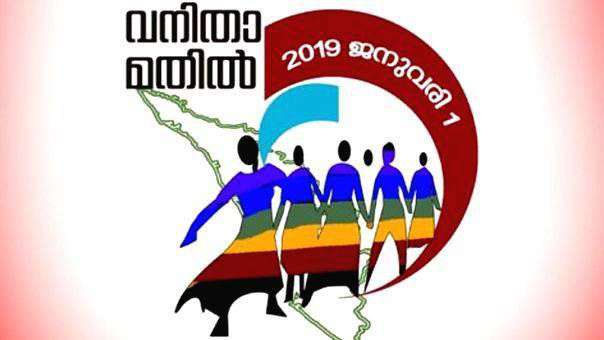
On 26 December 2018, right-wing Hindu groups in Kerala organised an event called Ayyappa Jyothi in anticipation of the ambitious Women’s Wall/Vanitha Mathil protest against patriarchy that the LDF government had scheduled for January 1, 2019. Thousands of people turned out with diyas and chanted in praise of Ayyappa. As always, I am filled with admiration for anyone who can get middle or upper middle class people out of their homes for anything so you know congratulations to all parties concerned for engaging in excellent photo-op warfare. I did have mild nausea when I saw some of the media coverage though. It was as if the pages had been designed by Raja Ravi Varma’s ghost. The lamp-lit, adarsh nari or adarsh baby photographs at dusk was even captioned on Malayala Manorama’s front page (Bangalore edition) like Ravi Varma would have. Waiting for Papa while defending Hindu Pride with a Serene Smile.
.jpg)
The genuinely pretty photos seamlessly fit into a certain kind of upper-caste Hindu pop culture Kerala sees plenty of on television and in cinema. Old grandma come down in the world addressing her granddaughters as kutty in a trembling, long-suffering voice as Kutty in starched sari prepares to go to office to support the crumbling tharavad. Savarna Culture as Malayali Culture. As Gentility. As Normal. The appearance of 80s good girl movie actors Jalaja and Menaka at this protest only added a little more feels. (If you have read or watched any MT Vasudevan Nair then you will know what I mean when I said the photos felt like #OppolRedux.) It was what my good Malayali friend likes to call Dignikutty. What my good Punjabi friend likes to call Performing Politics as Matrimonial Ad. Really few of those Ayyappa Jyoti photos would have been out of place on a matrimonial site.
Luckily, my tiny home state even in these genteel times continues to have lots of bloody-minded non-genteel instincts. So on January 1, 2019 when the Vanita Mathil rose it looked like anything but suitable girls. In all, 50 lakh women are said to have turned up in a chain stretching from 620 km. What women wore at this event were working clothes. Saris. Salwars. Since the Wall was the coming together of many organisations, lots of photos included women in uniform saris. Nurses in white. Nuns in Habits. Women in Hijabs. Actor Rima Kallingal in a white sleeveless top and dark pants. Many wielded umbrellas, caps and dupattas on their heads to deal with the afternoon sun. Small girls in their best, voluminous frocks and kannmashi-lined sceptical gazes in the afternoon. A sari-wearing woman striding forward with her fist in the air and a baby at her hip, never mind the government’s mumbling that children should not be brought to the Wall. In the Malayalam equivalent of As If: pinnale!
Now if you are wondering why I am talking about what women wore at a major political event as if I was an E!News reporter at the red carpet, come on! You know that what women wear is a major political event. Major anti-caste struggles in Kerala were borne out of women’s protests about humiliation via clothing. In Vaikom Basheer’s best-known novel Mathilagal (Walls), Basheer and Narayani are madly in love but always separated by the wall of their adjoining prisons. Now those walls were literal but some bricks in our metaphorical gender prisons are clothes, folks. When women’s clothes and bodies cease to be political we won’t have to line up in the afternoon Kerala sun to mark our humanity. And Prime Ministers won’t try to sound deep and knowledgeable about Gender Equality Vs Tradition.
You know who agrees with me about the significance of women’s clothes? Shefali Vaidya, a confident woman you’d know about only if you are on Twitter. On January 2, 2019 two young women entered Sabarimala, a full three months after the Supreme Court gave the green signal and a day after Kerala Chief Minister demonstrated the Malayali buy-in with Women’s Wall. Promptly came the temple priests wanting to faint, rise and wash everything with Dettol because everything now so dirty, I will arise and go live in Innisfree. Shefali Vaidya was concerned but cautious because she suspected the two women were burkha-clad heretics not disrespectful Hindu women bent on sacrilege. (Once not so long ago Pakistani security expert Zaid Hamid, engaged in sartorial political analysis like me and Shef, was convinced that 26/11 was done by Sikh RAW agents called Amar Singh and Hiralal because Ajmal Kasab aka Amar Singh wore a orange thread on his wrist) Friends and foes had to reassure Vaidya that the two women’s black clothes were not burkhas and just the black gear worn to Sabarimala.
Images of actual burkha clad women at the Women’s Wall were a major source of moral fibre and roughage for online critics. Hijabi women were frequently mocked for having the gall to protest patriarchy when they were wearing ‘garbage bags’ or ‘dressed like penguins’. The troll gold-standard emoji of laughing-till-tears was very much on display. The photo of a hijabi woman holding up a poster against Brahmanical Patriarchy was particularly held up as fodder of comedy and unintended irony. Now who is to explain at length that the metaphor of Brahmanical patriarchy is an affliction that affects women in every religious community. If only in the last two decades we had watched 300 Malayalam/Hindi television shows of women in hijabs leaving their house to support the family then perhaps it would be clearer that the Noble Feminine with a Mind of Her Own is not limited to the white Trivandrum sari and the heirs of Menaka and Jalaja.
In case you worried that the trolls were only going after Muslim women, not to worry. There were plenty of equal opportunity attacks against Christian women. The presence of groups from churches and the presence of nuns triggered lots of darkly knowing conversations about ricebag converts, paedophiles and rapist priests. Meaning that Christian women from whichever denomination should not publicly protest anything until every Christian denomination has been cleansed of every last sexual predator (not just Jalandhar diocese Bishop Francis Mulakkal) like presumably the tantri is cleansing Sabarimala right now. Not to be repetitive or anything but pinnale! Also this is the time to discuss Sister Lucy.
If you are saying Sister Who, guys come on! Sister Lucy Kalapura. She has been a vocal supporter of the nuns battling Bishop Mulakkal and has faced a lot of criticism, abuse and institutional reprimands for her clarity. Yesterday Sister Lucy wrote a Facebook post in support of the Women’s Wall. In the accompanying photo Sr Lucy who is usually seen in a habit was wearing a green salwar kameez or as Malayalis like to call this favourite ensemble — Churidar. Sr Lucy took time to address that important detail. Her clothes. She says, “I am travelling. For convenience I am wearing a common Indian outfit. I don’t want any priests to see my clothes and wrinkle their brows or beat their chests or go running to our superiors. [After all] priests can wear anything they want. Unlike nuns who decorate the altar with flowers, or sweep and swab or wash clothes, for whom [regular clothes] is banned.”
Hey sister, go sister, soul sister, go sister, churidar sister, wall sister. Or as aforementioned Punjabi friend translated: Tum Chup Raho/Chanta Laga.
Co-published with Firstpost.com
The post What Women Wore to the Women’s Wall in Kerala appeared first on The Ladies Finger.
]]>The post Do You Know The Exact Military Term For Army Chief Bipin Rawat’s Sexist & Classist Assumptions? appeared first on The Ladies Finger.
]]> In 2014, Air Force Chief Arup Raha said that women pilots were not suited to fighter jets. I had argued back then that he was right, women wouldn’t be able to fly fighter jets. Until they trained for hundreds of hours. Just like the men. But I also tickled myself with preposterous things people could have told the child Arup Raha warning him off his Air Force dreams. “A teacher telling 10-year-old Arup Raha when he was in Sainik School, Purulia that Bengalis famously disappear in airplane crashes so he shouldn’t dream of flying. Or some hard-ass, reality-loving trainer at the National Defence Academy, Pune telling an 18-year-old Arup Raha that he shouldn’t join the Air Force because that would distract him from his cultural heritage of writing poetry or singing Rabindra Sangeet.”
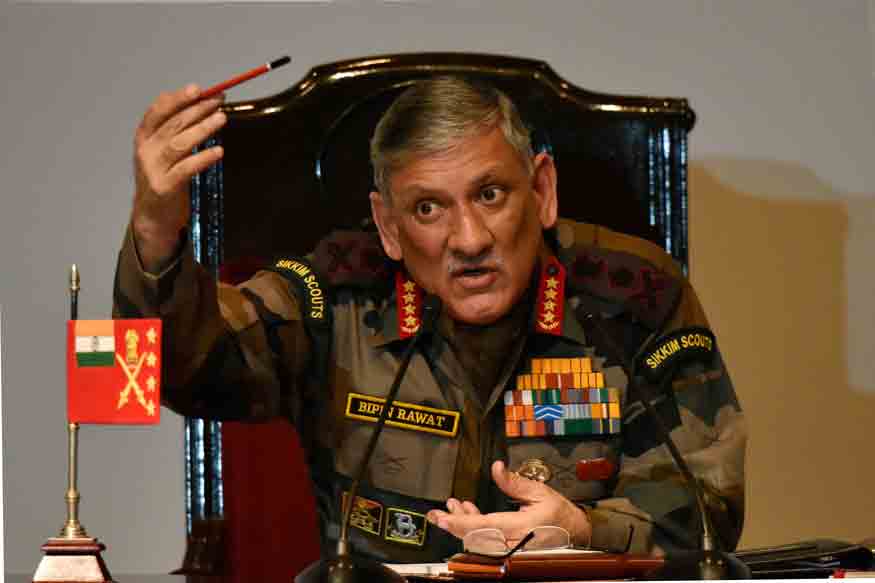
I wish my flights of hyperbole had been as enjoyable as Army Chief Bipin Rawat’s recent flights of logic. On December 15, in an interview with the TV channel News18, Rawat stated his many opinions about women while deploying a Trumpian syntax. So many opinions that it’s hard to decide where to start discussing them.
Back when Arup Raha’s hot take was the subject of many hot takes, a serving major-general was quoted as saying, “As a society, we are not ready for our women in combat roles. What if they are taken PoWs?” Rawat has similar concerns and is worried that women would die. The most touching illustration of mortality that Rawat could come up with? He said, “A lady who died was in service for 7-8 years. She has a kid of 2 years. He is in Delhi or Chandigarh and parents are taking care of the baby. So what I am saying is, now do you think we are ready for this?” One can only guess that the ‘he’ in Delhi/Chandigarh is the father of the child. What is clear that Rawat is not ready for the idea that the grandparents are taking care of the baby. That’s just too negligent of the dead mother. On the other hand, Rawat also feels that women cannot be made commanding officers because then obviously (obviously!) they cannot be given maternity leave. For the record, women in the army do get 6 months maternity leave (men get 15 days). Rawat is the human incarnation of the aphorism that society wants women to work like they have no children and look after their children like they have no jobs.
Rawat agreed with the News18 interviewer that women could and do die in other situations such as road accidents but he felt the nation was not ready for women to die in combat, to return “in body bags.” Rawat and the rest of the leadership of the armed forces in India have no issue with women dying every week if they are non-combatant residents of the North-East or Kashmir or even baby girls like Heeba, 19 months old and severely injured by pellet guns. For that matter, we don’t need to face the army and its cloak of patriotism to become an unworthy dead girl. One could just stay at home and be killed by our husbands. As a 2017 British Medical Journal study indicated domestic violence was found to increase the risk of death in Indian women by nearly 40 times than among American women.
While we are on the subject of American women, I have to share the amazing stream-of-consciousness style anecdote Rawat narrated about doing a course in the US and how he had to change for the gym several times a day in unisex locker rooms. “I did a course in US. We had 4 ladies and 10 male officers. So what happens is after every 3-4 hours you get a break of 1 hour in which you are supposed to have your lunch or you can go to the gym. Now when we go to the gym, we all change in the gym clothes in classroom all of us. When I was new, I would look the other way because ladies were also there but that is the culture there. They do it… then even in Delhi, ladies tell me that people peep. I am talking about isolation situation when she has 100 jawans around her but it happens here also in Delhi.”
The mash-up soundtrack for Rawat’s life-changing event is a combo of maami saying Shiva Shiva and Victorians looking for sofas to faint on. Has Rawat not been living in India where people find ways to change in close quarters all the time without shaming each other – from temple ponds to railway waiting rooms and handkerchief-sized homes? Has he just stayed in that American locker room all along? But really what is the point of applying logic here? You can only survive watching this interview by periodically surfacing, clutching your hair and exclaiming, “Who is this guy?” The answer to that question is this. Rawat is the guy whose mind when asked about women in combat, races to the Savita Bhabhi style scenario. He says, “now what will happen if there will be a lady officer here. Our orders are that a lady officer will get a hut in the COB, then there are orders that we have to cocoon her separately. She will say somebody is peeping, so we will have to give a sheet around her.” You know what, let’s make the best of Rawat’s thinly-sketched fantasy because sexual harassment in (and by) the armed forces is a giant issue, around the world. True to form, Rawat’s ‘solution’ has so little bearing with reality that I am willing to bet that Rawat is one of those men who does not know the price of toothpaste or milk and goes everywhere without a wallet. Because he doesn’t need to. You have to hope that some unsung hero/heroine somewhere is figuring practical solutions for complex or simple problems the army is dealing with.
I have never understood why any woman would want to join the armed forces but women do all the time, all around the world. Those who want to join the Indian army in combat positions might want to consider the career risks they face not from the enemy but the friendly fire of the high command. What leadership Rawat is offering to the men and women who currently work under him seems as thin as that imaginary sheet in the imaginary hut. Because in this interview as soon as he is confronted about his sexist assumptions Rawat promptly absolves himself and blames the sexism of the entire military machinery on the purported parochialism of the soldiers. He said, “Even today our jawans come from villages, so that acceptance will take time.” Now that move is what they call in military parlance, goli dena.
Co-published with Firstpost.com
The post Do You Know The Exact Military Term For Army Chief Bipin Rawat’s Sexist & Classist Assumptions? appeared first on The Ladies Finger.
]]>The post Representation, Resistance, Solidarity: What I Learnt from Attending a Women’s Political Caucus appeared first on The Ladies Finger.
]]>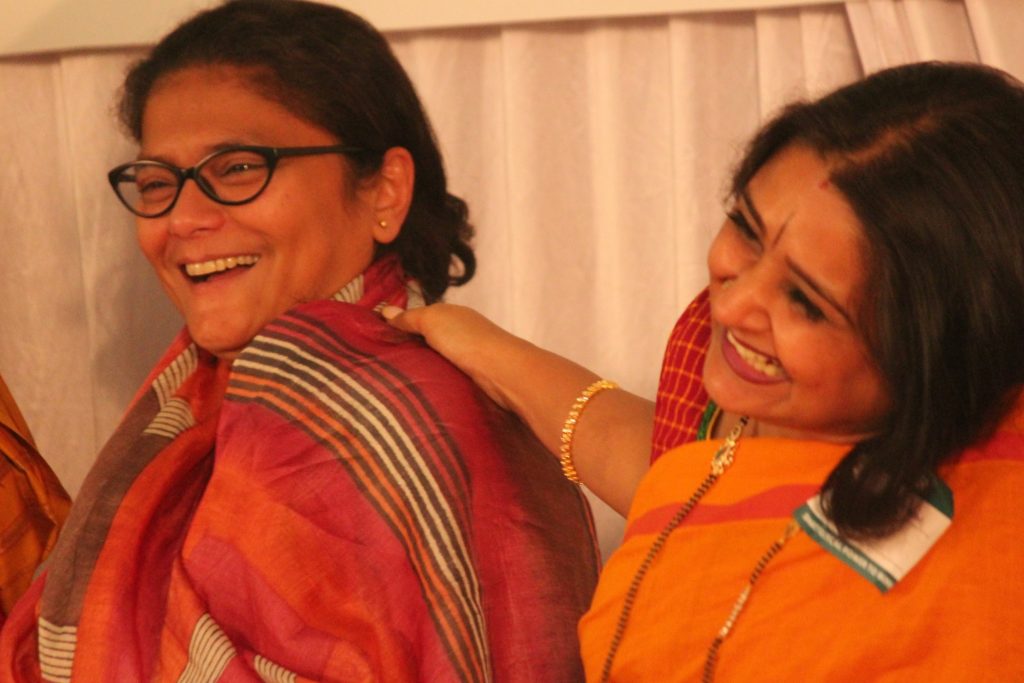
Congress MP Sushmita Dev and BJP spokesperson Malavika Avinash share a big laugh at the first national event of Shakti
Last Saturday I met and listened to more politicians than I have in my whole life and ended the day smiling. And you know, I like to think if you had come, you’d have felt the same way.
A few weeks ago I went to a meeting of a new group in Bangalore with a huge, one-point agenda. To get more women into political office. Any women from any party. The convenor was a stranger to me, Tara Krishnaswamy, a woman with a dayjob in a Bangalore tech company and a full second life in civic and political organising. I left the meeting impressed by many details, but mostly by her ability to conduct a meeting which set out its agenda, long term plan and assigned tasks for an event a month away, all in 2 hours. The meeting was relaxed though very few of us knew each other. Now that the first national event of the platform – since then named Shakti – is over, I still don’t know too many personal details of the rest of the volunteers. I do know that a volunteer who was feeling extremely unwell came in and did a speedy and elegant round of decorations of the venue, a hall in Hotel Chalukya where Bangalore’s politicians like to meet. I know two other volunteers woke up early to make lunch for all the volunteers. I know one young volunteer who did a hefty amount of translation had stood for local government elections recently. On a crowd-funded budget of a little over a lakh on Saturday volunteers ensured a daylong event with politicians from across the political spectrum, from the BJP, Congress, JD(S), NCP, AIADMK and DMK. Here are a dozen things I got from the last couple of weeks and from the day spent at the back of the hall.
It’s great to be among people who do not pay lip service to the idea of public life, who do not think of politicians only as some rogue service providers. At one point, a speaker said ‘dirty politics’ (as rhetoric) and from the front row leaped up Leela Devi Prasad. She first won elections at the age of 22 in 1956 becoming Bangalore’s first woman corporator. She has since won several council elections, become an MLA and a minister. But not even at 85 was she going to let anyone badmouth the idea of politics and had to be soothed into sitting back down. The truth was that hardly anyone in the room had the garden-variety contempt of politics. Apart from the volunteer who did translations the room was full of women who had either stood for elections or wanted to.
From the forthrightness of Dalit activist Ruth Manorama (who has contested as a JD(S) candidate in the 2014 general elections) or C Motamma (vice-president, Karnataka Pradesh Congress Committee) or former AIADMK MLA Bader Sayeed to the more diplomatic terms of BJP spokesperson Malavika Avinash or the Congress MP Sushmita Dev, what is the one thing that everyone agreed on? Existing political structures have made little to no room for women. India ranks 148 among 190 countries around the world, as far as women’s representation in politics is concerned. Bangalore’s only woman MLA, Sowmya Reddy says she talks about being part of Karnataka’s 4% at every meeting she goes to.
A friend who works in education attended the event with low expectations and only because her college-going daughter persuaded her to. Afterwards I asked her what she thought and she said she was struck by how different the meeting was from activist meetings she used to go to a decade ago. “Back then it was all people who were on the same side, all disagreeing about small things and being holier than thou.” This was indeed stupendously different from Saturday’s speakers and the audience who disagreed on pretty much everything – including where the capital of India should be. Except that women should have their fair share of representation in politics. I agreed with my friend that it was dizzying and unnerving and glorious to be away from the echo chambers.
Despite the range of political positions in the room discussions remained always civil and fruitful. In the afternoon there was a tense moment during a panel, which featured Surabhi Hodigere (young political consultant who is strongly allied with the BJP and RSS) and Ruchi Gupta , head of the NSUI. But just a few minutes later, Hodigere, talked about what she thinks encourages women to rise in politics: to see other women working in politics. She talked about how the presence of Nirmala Sitharaman inspires her. She talked about making it a point to always say at public gatherings that she wants to be the first woman CM of Karnataka. Then she said with fulsome grace that she was sure that the presence of Ruchi Gupta encourages other women to join politics, the kind of fantastic gesture that made me start counting the number of women in the room I could imagine as Chief Minister. Including Surabhi? Lots.
I first learnt about the winning streak of women candidates in India from Tara Krishnaswamy but data affirms it over and over. Data from the last Lok Sabha elections indicate women candidates win at the rate of 9.6% and men at the rate of 6.4%. Similar rates can be found in legislative assembly elections and local government elections. If parties field women, women win elections. But parties do not like fielding women because parties at every level — ticket distribution committees to fundraising committees — are run by men.
Despite everything, despite every last minor annoyance or mortal danger, women want to stand for elections. P Krishnaveni, former panchayat president in Tirunelveli district, nearly died in an attack by her upper-caste political enemies who couldn’t tolerate her caste or her extreme competence. They hacked two of her fingers off and severed her ear and left her for dead, next to a library she had built. That was in 2011. Krishnaveni is among a tsunami of the lakhs of women who have been part of the local government across India and effected change in their constituencies. The scars were visible on her arms but Krishnaveni spoke this Saturday with great gravitas and sincerity in favour of women in politics.
And that brings us to reservation. Unlike every uncle you know who starts saying Laloo Rabri when they hear the phrase of reservation for women. (Laloo was predictably against women’s reservation) participants agreed on the fantastic results wrought by reserved seats for women. A volunteer who had come from Mysore said with a gleam in her eye that she had read a study that indicates that women who win in reserved seats go on to stand for elections in open seats the next time round. This detail was affirmed by speakers such as Varsha Nikam, a sarpanch from Maharashtra (with swagger and a thrilling public speaking style).
And when having slogged and slogged for parties (that like women foot-soldiers to get women voters) deny them tickets, what do women do? Apparently hundreds of women stand as independents or ‘rebel’ candidates. Their own way of battering at the low and thick glass ceiling in Indian politics.
While the subject of money (how much you need to run) was touched on, it needs a mountain more of discussion. As does how sexual harassment keeps women out. Again politicians from different parties agreed that the establishing of ICCs in parties and stronger anti-sexual harassment policies were a strong need.
Recently Michelle Obama made headlines around the world by saying about Sheryl Sandberg’s Lean In philosophy, “that s**t doesn’t work all the time.” I was fascinated to notice how husbands, family and children rarely made an appearance in the all-day discussion. I am actually hard-pressed to think of a single mention, which was not merely in the context of husbands and families bringing in women as candidates. Not in the context of domesticity or work-life balance or anything.
Which brings me to what we can call The Husband Stitch (to borrow from Carmen Maria Machado). Yes, yes, many women in politics get in because their husbands want them to stand in seats reserved for women and be malleable. (And as Krishnaswamy said, nobody questions the competence of sons and nephews and brothers-in-law who get tickets). Except as studies show and speaker after speaker said on Saturday, it doesn’t matter if we start off with a Sarpanch Pati situation. Once women get their foot in, everything changes. It changes for them and it changes for women voters who are usually ignored by male politicians. As the fascinating research by Bhanupriya Rao (who also spoke this weekend) indicates in many parts of the country, ‘women panchayat leaders functioned independently, without male interference or support.’
I found the discussion about women’s wings of political parties rewarding. Yes, it can be a place to relegate talented women politicians said some but Sushmita Dev, president of the All India Mahila Congress argued that the women’s wing can be a place for a soft start for women with no connections to build their political network and capital. So how to deploy the advantages of both career paths is something for us to think through.
A month ago I reached out to an out-of-town friend and asked her for a Rs 500 contribution to the event. She offered Rs 3000 and asked me to ask people for more. After the event, I reported how great it was and she said, “of course, we need something which is not the same old beef-vidhwa-Ayodhya discussion everyone on the left and right is stuck in. As if there are no alternatives to this discussion. There has to be a fresh framing. Another way of seeing the world.” Or as Ruchi Gupta had said, a creation of a political idiom that is not hypermasculine and hypermuscular.
The day ended with the assembled group agreeing that we need to demand 50 percent women candidates from political parties in the 2019 elections.
As recently as 24 November, members of Shakti had petitioned the Congress Manifesto Committee in their consultations on gender, asking Sushmita Dev for her backing of the Women’s Reservation Bill. As I write this, I hear the glad news that Rahul Gandhi has endorsed Sushmita Dev’s recommendation and has written to all state chief ministers from the Congress and allies telling them to officially back the women’s reservation Bill.
The road ahead is long but sakhi, see you in Delhi!
Co-published with Firstpost.com
The post Representation, Resistance, Solidarity: What I Learnt from Attending a Women’s Political Caucus appeared first on The Ladies Finger.
]]>The post The Return of MJ Akbar, Chaucer and The Sweet Buttery Feel of Himpathy appeared first on The Ladies Finger.
]]> Perhaps you’ve studied Chaucer in college. I didn’t. I knew he was a poet from medieval England and called the Father of English Literature and really that was about it. This week I read for the first time that Chaucer scholars everywhere now have to take in the implications of a legal document from 1380 by a young woman called Cecily Chaumpaigne releasing Chaucer from charges of rape. I didn’t feel any sense of deep personal betrayal, the way I would have if I’d found out that George Michael was a horrible man, for instance. But I was fascinated to see that almost the entire screen of results if you google Chaucer and rape are defences of the man.
Here is Wikipedia, for instance, inserting earnest feels where there should be bald and unsatisfying description. “He was mentioned in law papers of 4 May 1380, involved in the raptus of Cecilia Chaumpaigne. What raptus means is unclear, but the incident seems to have been resolved quickly and did not leave a stain on Chaucer’s reputation.” Here is a sample from a blog dedicated to Chaucer. “It also seems unlikely that a man of Chaucer’s character would commit a crime of sexual violence. Chaucer’s contemporaries recognised his sympathy for women (Gavin Douglas described him as ‘evir […] all womanis frend’), and he is still held as a man before his time by many modern critics.”
Six hundred years later most people don’t want to deal with the fact that Angrezi Ke Daddy may have been a baddie. So is it surprising how MJ Akbar and other men accused by multiple women of sexual harassment or assault are being rehabilitated at the speed of light? They are all the beneficiaries of ‘himpathy’ a kakka-sounding but super useful word that seems to have been coined by American writer Kate Manne to describe ‘the inappropriate and disproportionate sympathy powerful men often enjoy in cases of sexual assault, intimate partner violence, homicide and other misogynistic behaviour.’
On Wednesday, a portion of the newspaper-reading public woke to an opinion piece in the Hindustan Times by MJ Akbar who recently stepped down from his position as Minister of State for External Affairs under massive public pressure. He has been accused by 16 women journalists of sexual harassment and assault. Seventeen other women have asked the courts to take in their testimonies while evaluating Akbar’s defamation suit against Priya Ramani, the first journalist to name him.
Akbar’s appearance in Hindustan Times has triggered a wave of worry and a wave of glee. Is #MeToo over, asks the genuinely concerned and the concern trolls.
Opinion pieces are meant to offer you perspective. The first thing that Akbar’s does is provide an answer for all the folks who have been so concerned for the precious reputations of men accused of harassment and assault? Oh my god, what about his reputation? The answer seems to be that wonderful Hindi word, ghanta. I know that it may mean other things but let us pretend it only means bell. For whom does the ghanta toll? Nobody. They get op-eds. They get jobs. They get congratulated warmly for winning awards like Nawazuddin Siddiqui, despite actor Niharika Singh’s crystal-clear accusations against him. I saw a man kicked out of a Bengaluru organisation for incredibly gross behaviour, tweet a week later about his new project — happy as you please. Bishops are garlanded. I hear that men who are still being investigated by internal complaints committees are telling their friends and acquaintances that it’s all a conspiracy, sometimes against them, sometimes against the BJP, sometimes by the BJP.
What about the other question that concerned citizens have? ‘Is a man accused of sexual assault to be ostracised forever?’ May I briefly point out that Akbar resigned from his post on 17 October. On 28 November he had a byline in a newspaper that all of Delhi reads. Would that other people’s careers looked a hundredth as good as his ‘exile’.
But sure, if you have done time for your crime you should be allowed to move on with life. If there was a legal process that kicked in to examine the crimes committed or where the crime can’t be prosecuted the accused repented, sought forgiveness that would be a different thing. Instead powerful men all over the world grab the law as their next weapon of choice against complainants. So actor Arjun Sarja files a case of cyber crime against Sruthi Hariharan. Akbar files a case of defamation against Priya Ramani. RK Pachauri wants his reputation of being litigious to be as widespread as dandruff. Witnesses die when bishops are accused. Rajalakshmi was beheaded. This week, an American newspaper had a story about billionaire Jeffrey Epstein who was accused of exploiting dozens of underage girls. His lawyers managed to get him a deal where he pleaded guilty and only had to serve 13 months in a local jail, during which time he could work out of his own office for 12 hours, six days a week.
Meanwhile, women are roundly scolded for not following due process. Actor Parvathi doesn’t get offered any work anymore in Kerala. Chinmayi Sripada has been shunted out of the Tamil film industry by just the most shady tactics. This whole storm started with Tanushree Dutta talking about how she was shunted out for attempting to follow due process.
Most of all, we should learn from Akbar’s op-ed that men will be appointed, hired, rehired and rehabilitated where no one needs them. Where women could have done the job happily, competently and without assaulting anyone. Men accused get rehabilitated on the basis of himpathy. Because can anyone really argue that the world needed one more article praising Arun Jaitley? And then that we needed one specifically written by MJ Akbar? No, the fine balance of the male world has been ruined by a man being made accountable. That fine balance can only be restored on the shoulders of another man who has not been made accountable. Daddy to Daddy network.
Akbar’s article extolling the smartness of Jaitley begins, “Success, as the saying goes, has a thousand fathers and failure languishes as an orphan.” Dude. Come On. Himpathy ki bhi hadd hoti hai.
Co-published with Firstpost.com
The post The Return of MJ Akbar, Chaucer and The Sweet Buttery Feel of Himpathy appeared first on The Ladies Finger.
]]>The post The Kannada Film Industry is Trying to Bully Sanjjanaa and Sruthi Hariharan. And Failing appeared first on The Ladies Finger.
]]>
Sanjjanaa and Nagendra Prasad. Still from Sanjjanaa’s ‘apology’ video via Facebook
I first learnt the word ‘recant’ in school when reading about the 17th century Catholic church forcing Galileo Galilei, one of the founders of modern science, to give up his theory that the Earth moves around the Sun. The Church back then believed that the earth didn’t move. But there is lots of proof to indicate that it wasn’t exclusively his heretical views of heaven and earth that agitated the Church. Apparently several officials were enraged that Galileo’s book Dialogue Concerning the Two Chief World Systems made fun of them. (The Church only officially agreed with Galileo in 1992, a full 359 years later.) Legend has it that under duress Galileo recanted but as he left the courtroom muttered Eppur si muove. Meaning, “and yet it moves.”
It was hard not to think of forced recanting recently while watching a video of Kannada actor Sanjjanaa apologizing a month after first sharing her allegations of sexual harassment during the filming of the 2006 movie Ganda Hendathi. She had said in October that the director Ravi Shrivatsa had forced her into doing scenes she didn’t want to do and also used camera angles to make shots more obscene than she was comfortable with.
The first alarming thing about the video? Sitting beside her is Nagendra Prasad, President, Kannada Film Directors’ Association. Was he there to support her? Er. No. It was more in the mode of Angrezo Ki Zamane Ki Jailer in case Sanjjanaa got any more fancy notions of truth-telling.
Prasad slumped next to her in the sofa looks bored and disinterested in the beginning, not quite captain of the industry. Sanjjanaa on the other hand sits tall, alert and clear-eyed as if she was about to talk about her career goals for 2019. Sanjjannaa says, “Some people in the association have taken this personally, they have been hurt. I’ve listened to actors such as Ambareesh, Rockline Venkatesh and Doddanna.” Sanjjanaa uses the Kannada phrase maathu keli several times (which means both ‘listened to what they said’ and also obeyed). In a bit Prasad begins interrupting her and scolding her, not even allowing her to finish this stage-managed apology on her own. When Sanjjanaa begins to say, if I have hurt anyone’s feelings… Prasad says, “there is no if. You have.” Sanjjanaa tells him that she has feelings too. Prasad says tetchily that her intention to hurt doesn’t matter, only that she has hurt the feelings of the director and team of Ganda Hendathi. Prasad says again that there is no need for her to talk about her feelings again and that she has hurt ‘our’ feelings and that is why she has been asked to apologise. Sanjjanaa ends by saying that she did not make her #MeToo statement to malign the industry. As if Prasad had not made a spectacle to malign the Kannada film industry. Like the gents from Bollywood who smack in the middle of the #MeToo wave made an all-male team to go meet the PM.
Some five years ago I had the strong giggles when Kannada film actor Jaggesh complained at length that young women actors had the temerity to turn him down because of a sizeable age gap. Back then, he was enraged that at 50, his age might have contributed to actor Divya Spandana’s decision (who had just become India’s youngest MP at 30) to back out of a film. He complained at length about Rajinikanth and Amitabh Bachchan getting very young co-stars while he and others in the Kannada movie industry had been spurned. So much thwarted entitlement.
This year, in late October Jaggesh sprung up in support of actor Arjun Sarja convinced that the #MeToo movement in the form of actor Sruthi Hariharan was targeting Sarja for ‘political reasons’. Because what else could it be? One pal of Sarja was convinced that it was a left-liberal conspiracy and that Sruthi was following a script. Why? To derail Sarja’s plan to construct a Hanuman temple. Also. Is there an also you may wonder? Yes there is. Also to thwart Sarja’s cow-protection. This according to Sarja’s pal is evident is because one of the actors who has stood up in support of Hariharan, Prakash Rai, according to the Sarja pal, is a beef-eater. Sarja’s daughter Aishwarya also wondered whether someone was upset because she and her sister had gifted Sarja a cow and that had set off the sequence of events.

Sruthi Hariharan
Just like it being a deep plan of Lutyens Media to uproot Gaurav Sawant. Just like it being the 2019 elections which brings on dozens of sexual harassment and assault allegations against MJ Akbar. And so on and on.
There is a popular saying. “If you hear hooves, think horses, not zebras.” What happens to the simple possibility that what Sruthi Hariharan said was true, that Arjun Sarja did harass her during the making of the Kannada film Vismaya? And that what Sanjjanaa said was true. That Sanjjanaa, a veteran of 45 films looking back at her career objected to being disrespected, being lied to, being bullied, much like Tanushree Dutta did.
Instead Arjun Sarja riding high on his delusional wave of supporters has filed a complaint with the Cyber Crime unit in Bangalore accusing Hariharan of making fake social media accounts to troll him.
Arjun Sarja
That men like Nagendra Prasad and Arjun Sarja are blind to the reality who work with them is clear in that they think that their stage managing off-screen drama and prurient bullying will break these women. These two women’s coping strategies are different but both remarkable. Hariharan has no trouble articulating where the trouble lies and seems utterly fearless. She said in an interview with The Indian Express, “Because I once answered a question in a radio interview about a favourite sex position, it is being used to show that I am a woman of no character. It is being argued that someone who speaks like that should have no problem with a man’s touch. No one understands the difference between consent and lack of consent.” Did she back down after the FIR? No she didn’t. Hariharan moved the Karnataka High Court to quash the FIR, her petition accurately describing the accusation as ‘absurd’ and ‘inherently improbable’. Much like Sarja’s defences.
Responding to the news that Chinmaya Sripaada is being pushed out of the Tamil industry formally for her allegations of sexual harassment against lyricist Vairamuthu, Hariharan tweeted, “We need -yes NEED more women like her. Women who are strong, fearless, and are capable of working independant of such men/bodies/associations. She doesnt need them to survive and without them she shall flourish. More power 2u Chinmayi.”
While Sanjjanaa’s apology is being marshalled by foaming-mouthed men on social media convinced that many more women will back down, I urge them to think again and watch that video again. That video was a spectacle that would make many women viewers skin crawl with its familiarity, its deep desire to shame Sanjjanaa. It made me feel nauseous and violent. But also not. Because of regardless of what ‘maathu keli’ she says she has done, at no point does Sanjjanaa look cowed down and at no point does she actually recant her accusations.
Two days after the video went online Sanjjanaa spoke up again. She said that she had decided on the urging of men like actor Ambareesh and Rockline Venkatesh to apologise, “to calm the whole situation down.” However she stands by her story. She said, “I still maintain that everything I have narrated is true. And even though, I have apologised, I have won my battle in my own way.
And yet, it moves.
Co-published with Firstpost.com
The post The Kannada Film Industry is Trying to Bully Sanjjanaa and Sruthi Hariharan. And Failing appeared first on The Ladies Finger.
]]>